How do we trace a leak across a large roof field?
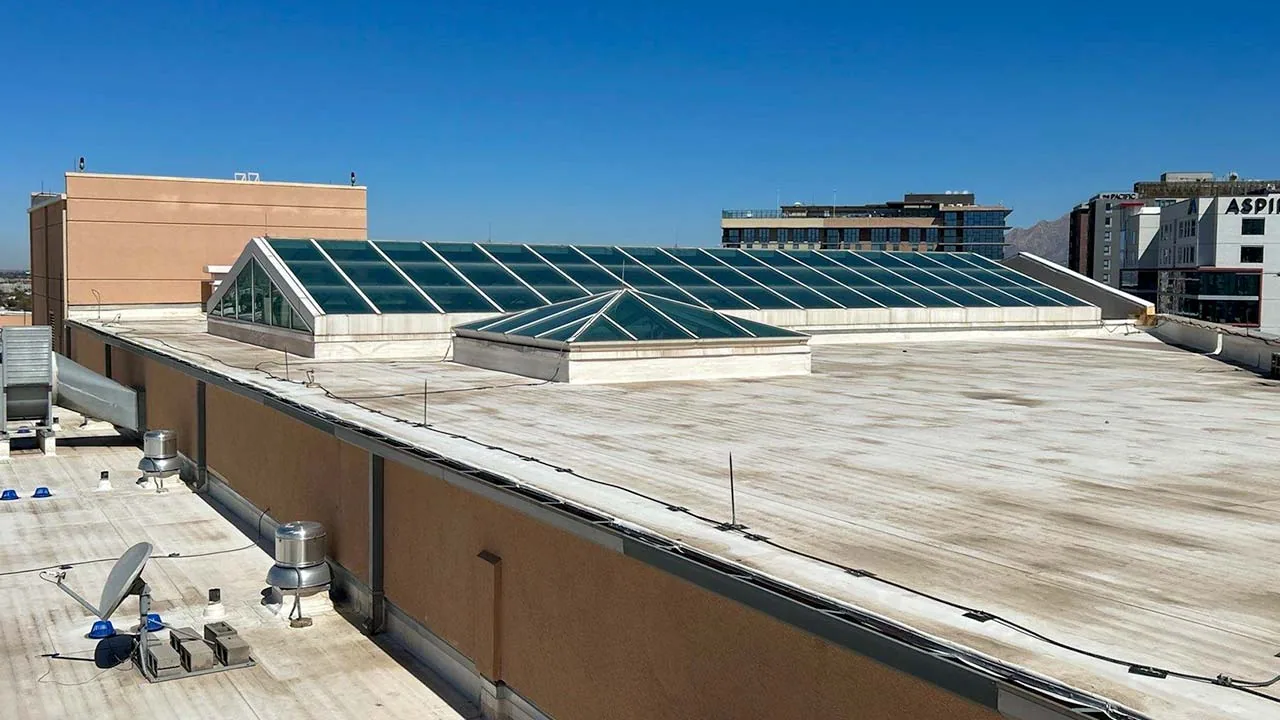
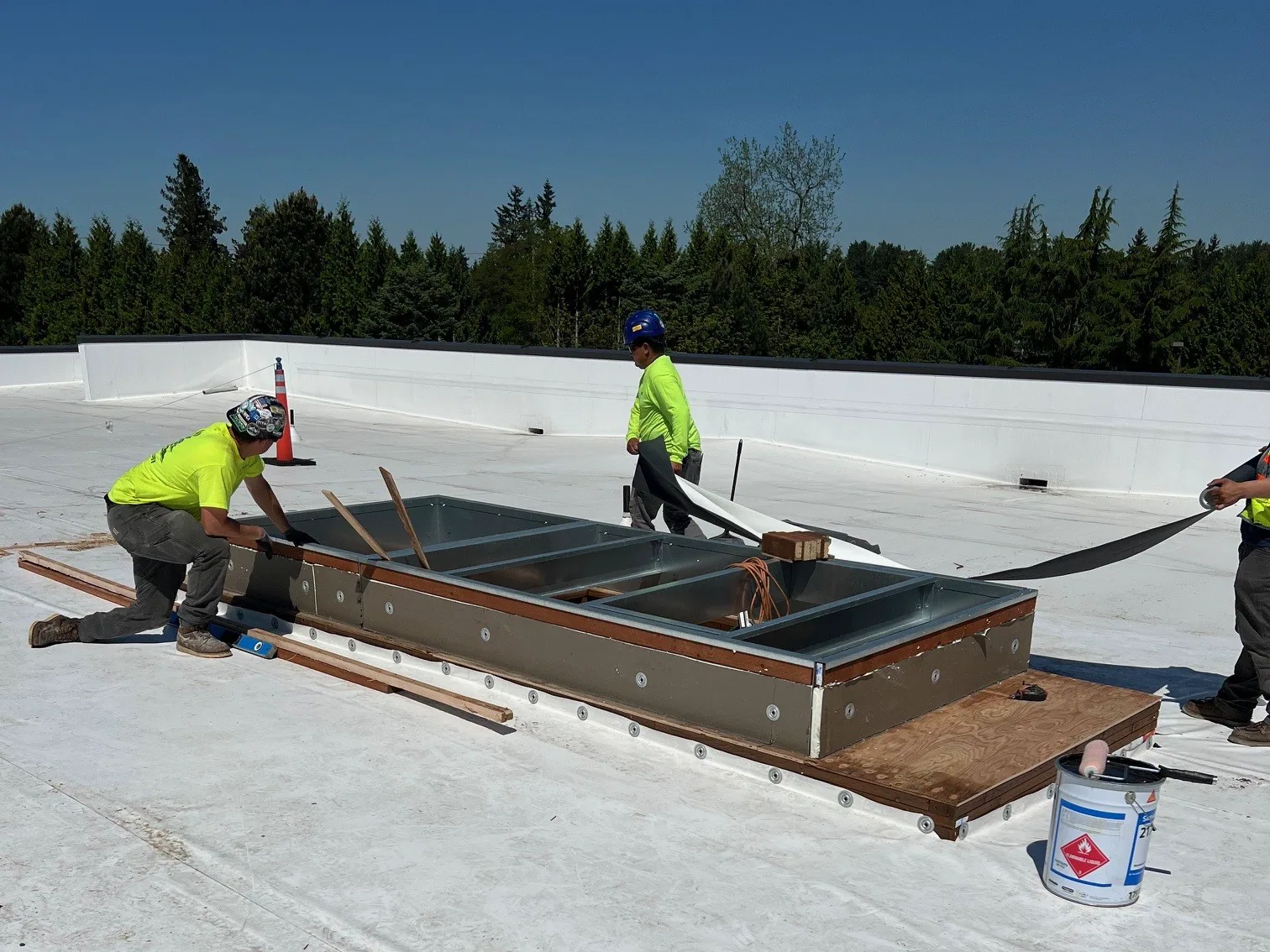
A leak report may identify a department, sales area or stock zone, but the roof entry point can be several bays away. Water follows slopes, deck flutes, insulation joints and framing; it can emerge at a low point that does not align with the opening. We use the interior location as evidence, then inspect drains, seams, curbs, skylight transitions and perimeter details along the plausible route.
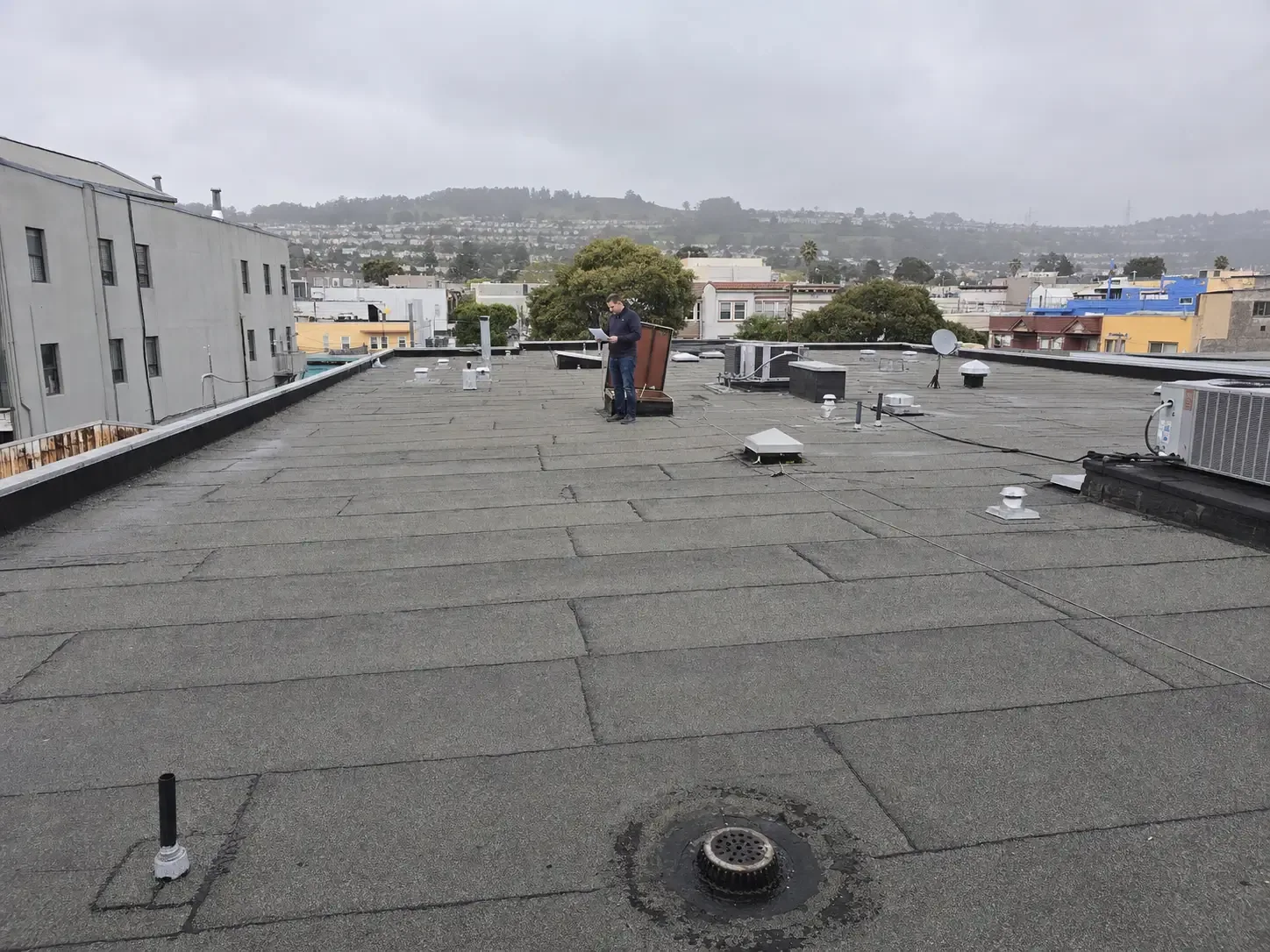
Large uninterrupted fields also make repair limits important. A patch must reach sound, compatible membrane and attach to a substrate that can hold it. We look for prior patches, open laps, splits, punctures and trapped moisture; then mark the limits of verified deterioration. If testing or selective removal is necessary to confirm wet insulation, that step should be stated separately from the final repair quantity.
The report should include roof-area references that a facilities contact can use again: grid, column line, equipment tag or a marked roof plan when available. Photographs without orientation can be hard to act on after a visit. Identifying each observed condition and its relation to the nearest curb, drain or edge gives the owner a practical way to approve scope and compare later findings.
Garland’s retail mix spans established commercial corridors and planned development areas. For a large-format store request, identify the operating property, loading areas and roof zone before setting a repair or replacement phase.