Which outlet or flow path is involved?
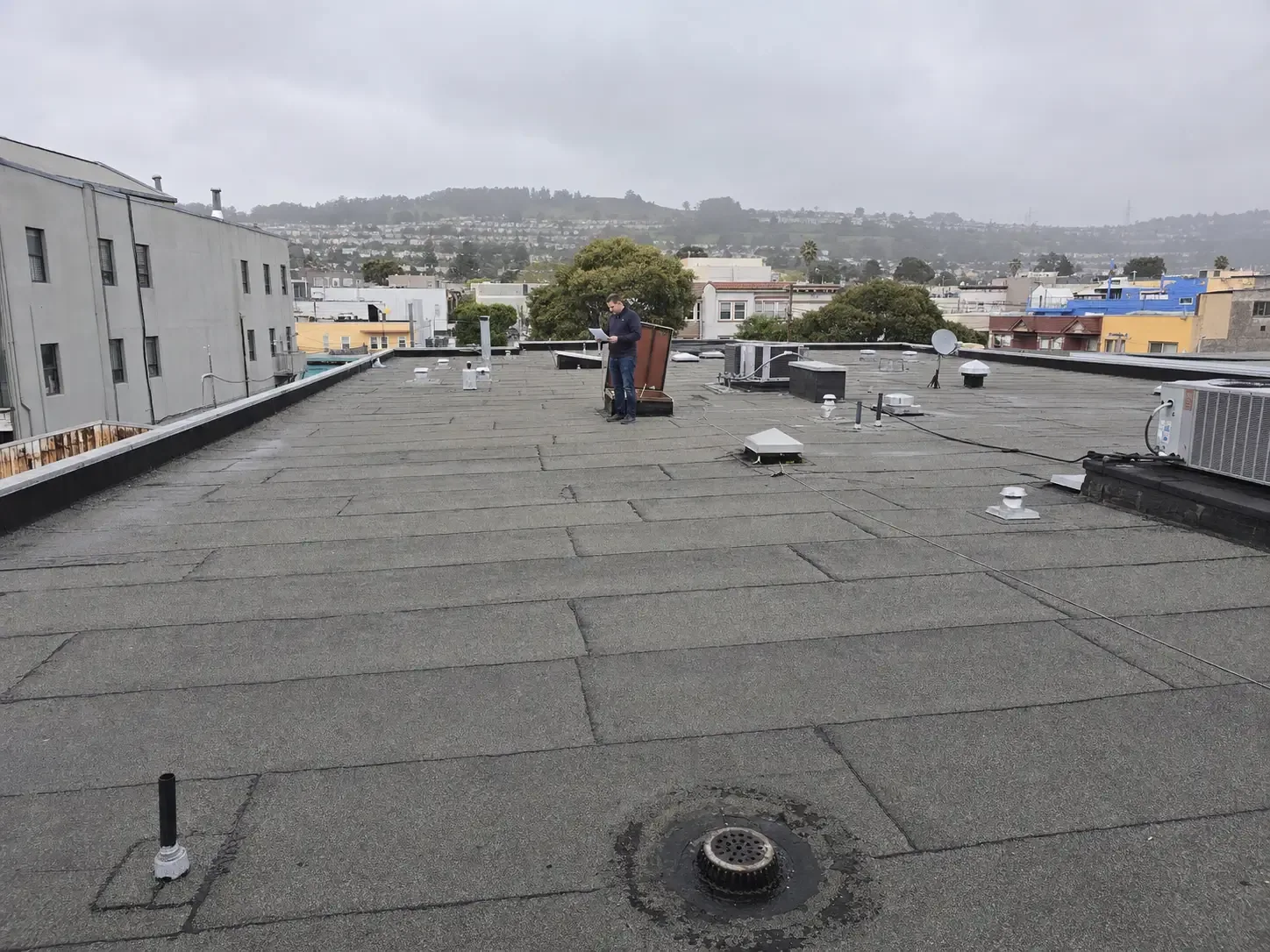
Identify whether the roof drains internally to a bowl, directs water through a scupper, or uses an external gutter and downspout. Trace the roof surface feeding the outlet and note the low points, seams and transitions along that route. A leak next to a drain can start at the flashing, nearby seam or a different penetration. Record the observed condition and roof zone before assigning the repair boundary.
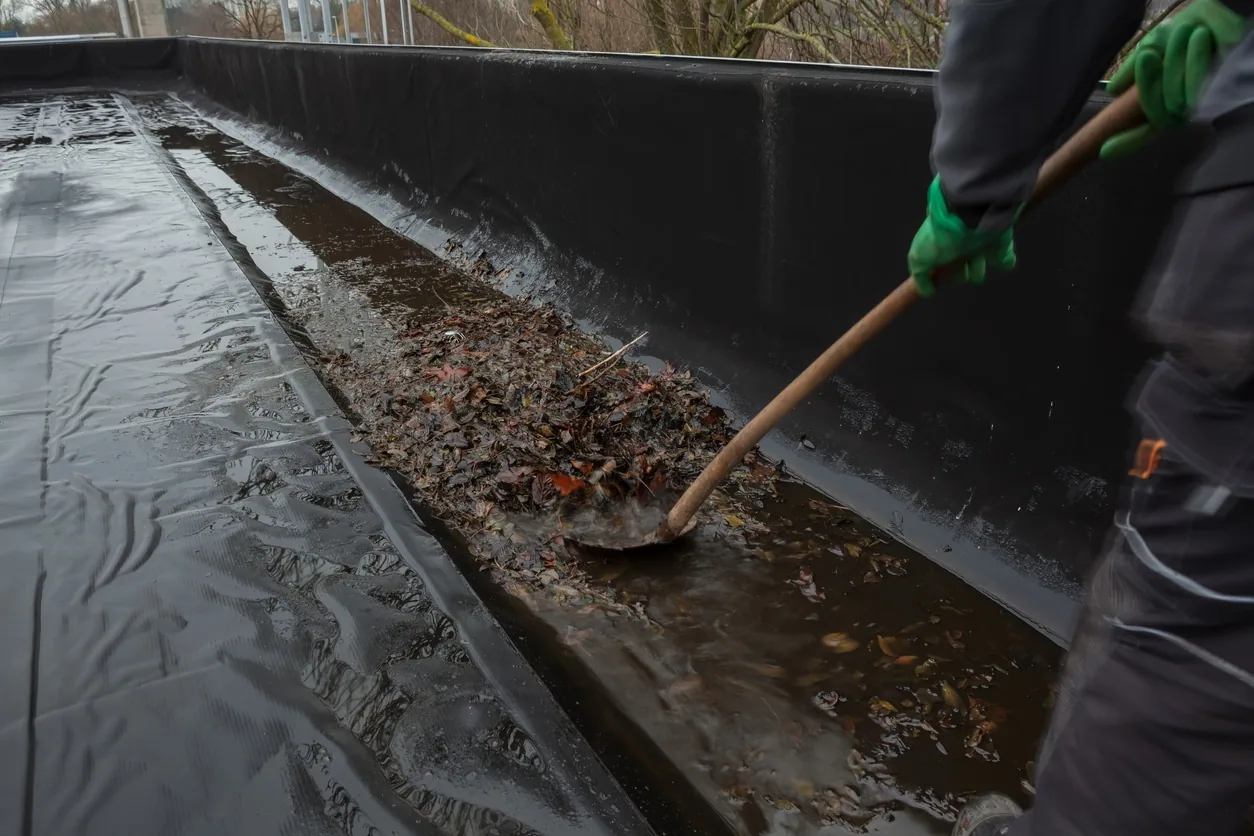
Inspect the opening for debris, loose strainers, corrosion, displaced metal or damaged membrane at the perimeter. Record whether water was present and the conditions at inspection; compare that observation with the outlet's performance after rainfall. If an outlet is blocked, describe the visible obstruction and identify whether a plumbing contractor must inspect the line below the roof connection.
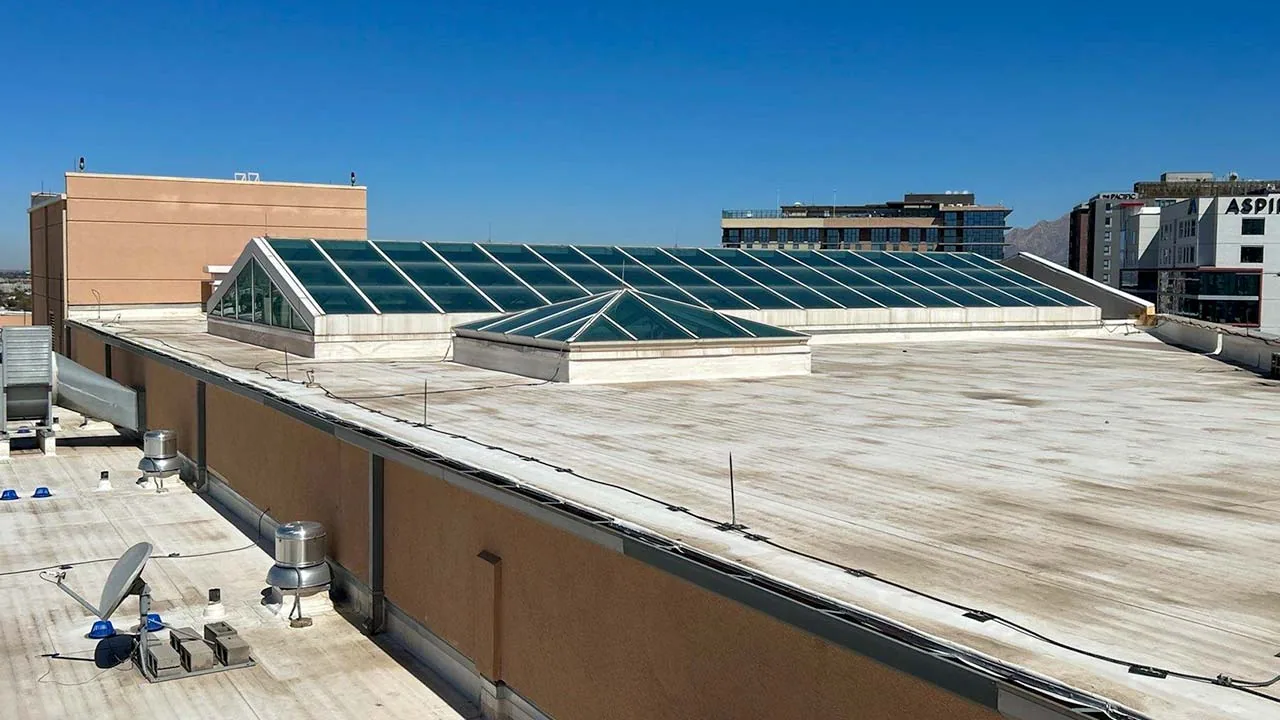
Map each outlet separately when roof zones have different flow paths. A roof plan or context photograph can make the repair location repeatable for the building contact. Around the bowl or scupper, inspect the sump, flange, membrane termination and nearby seams as one connected water path. Record standing water only with its location and inspection conditions, then note whether the outlet cleared during the visit.