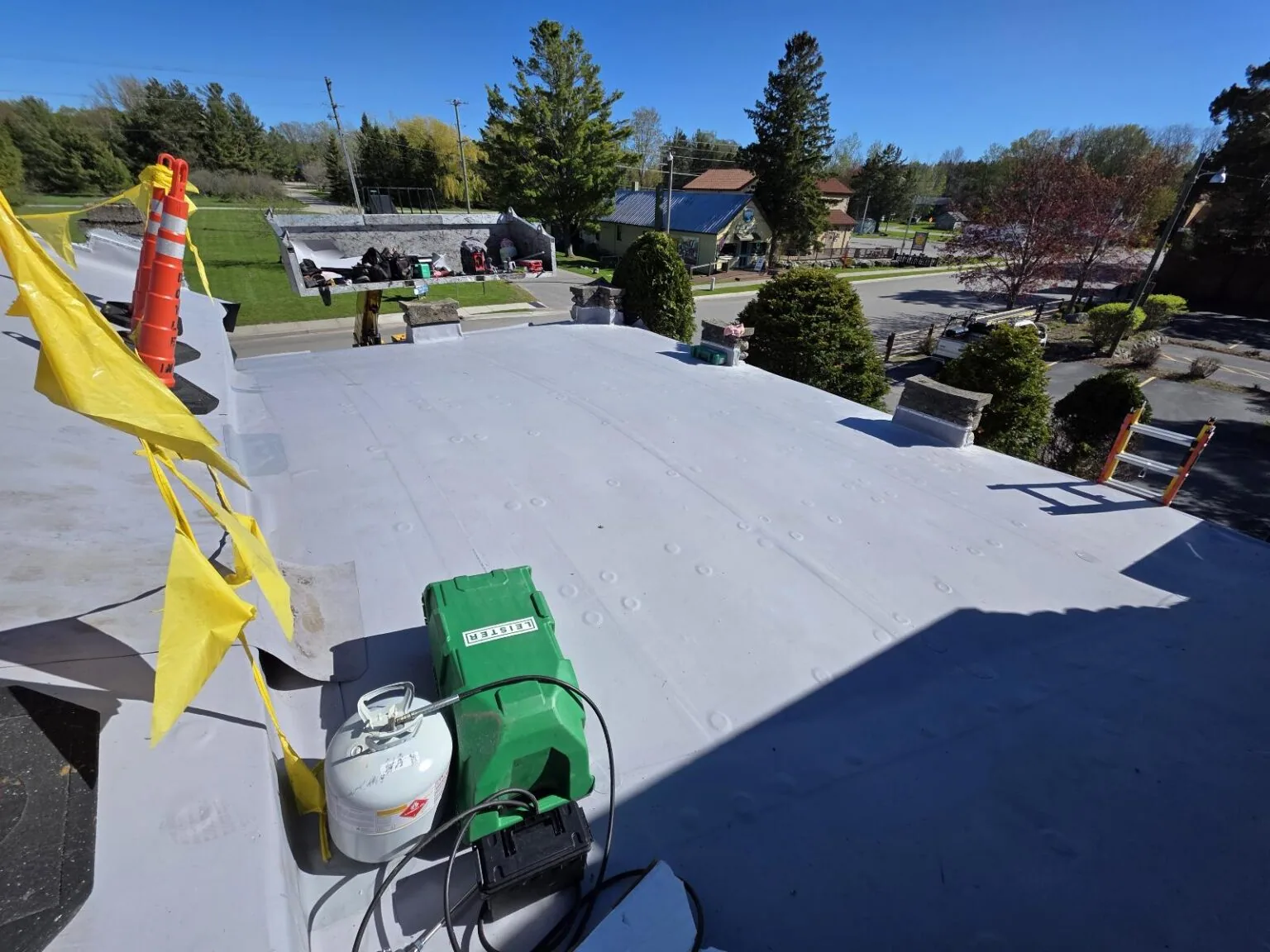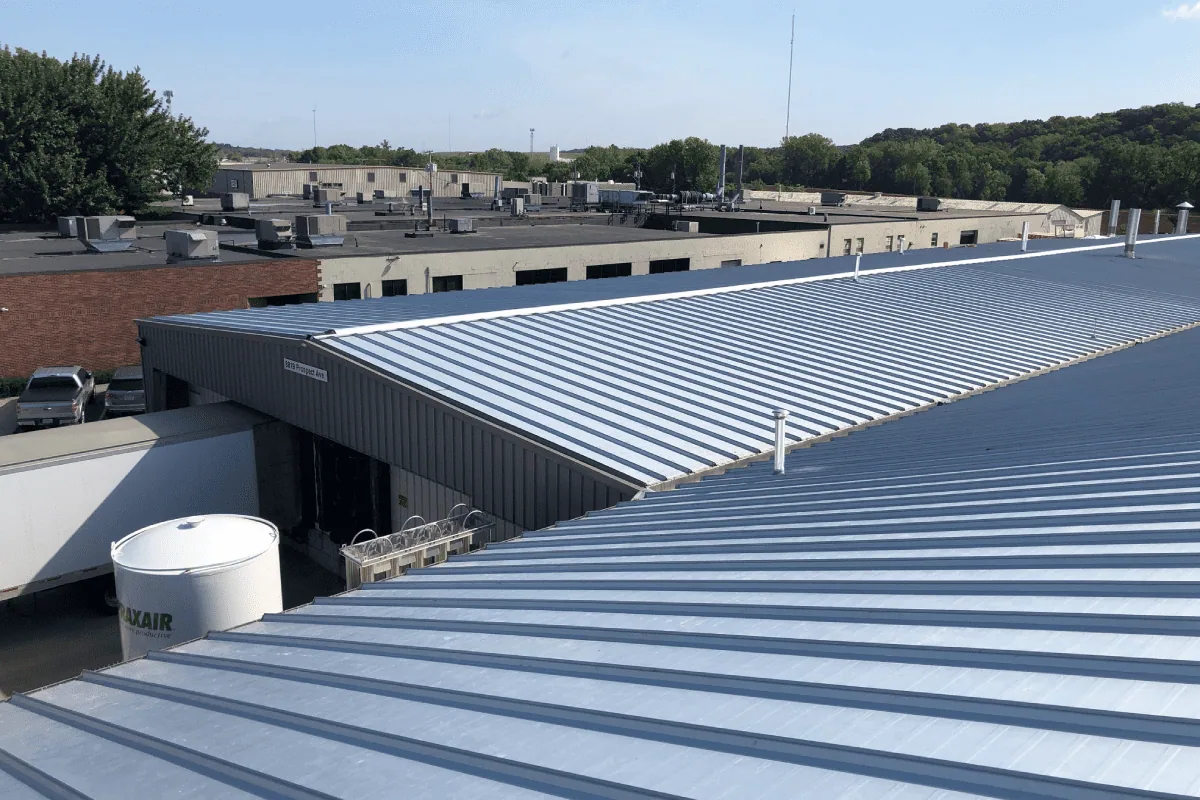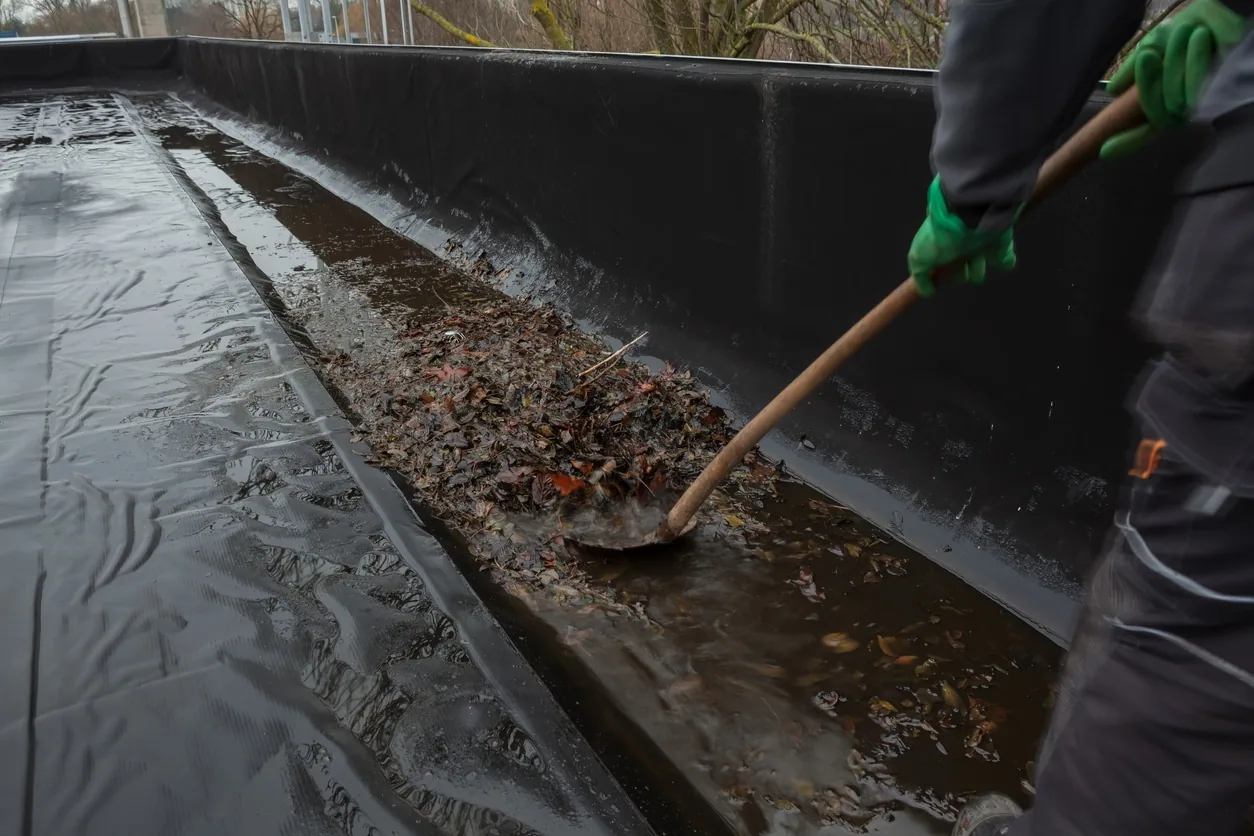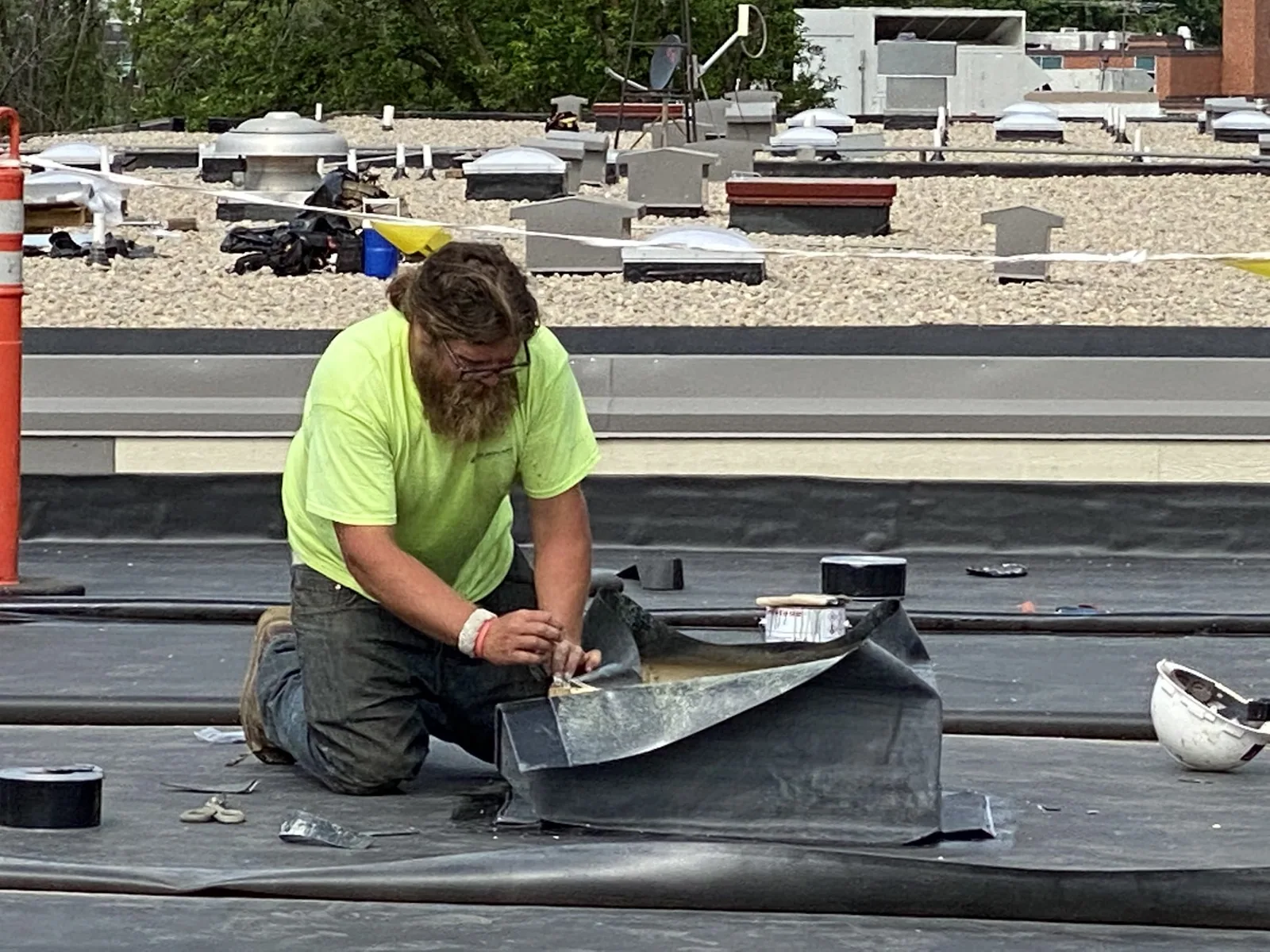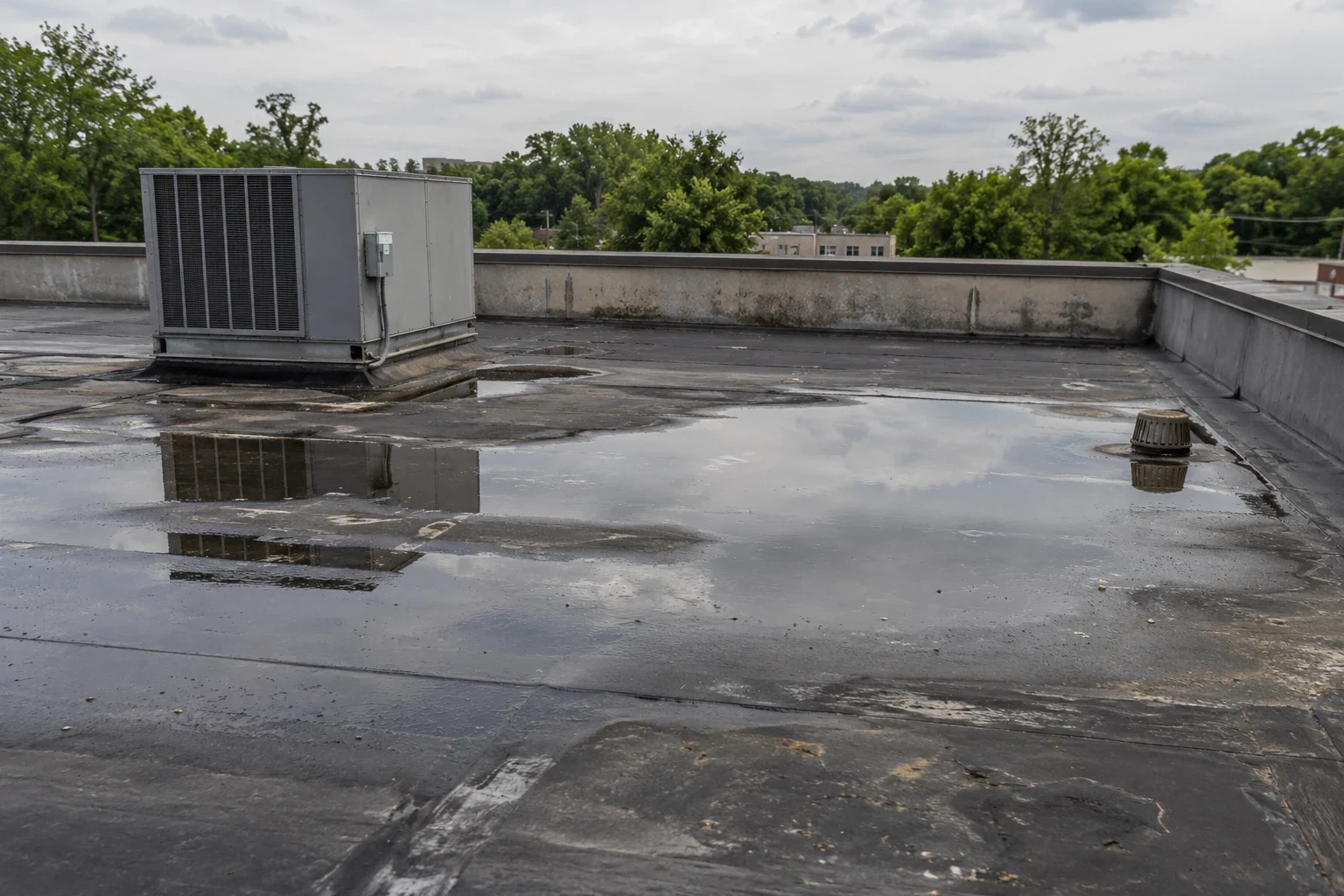
Where does water remain, and when was the roof observed?
A photograph taken soon after rainfall may show expected temporary surface water, while a later observation can help locate a persistent low point. Record the observation time, recent weather if known and whether the water level changed. We compare the basin with nearby slopes, drain bowls, scuppers, overflow openings, curbs and seams. Debris at a strainer is a different correction from a depression created by deck movement or compressed insulation. A single view from a doorway may miss the water path and low point. A time-stamped observation helps us decide whether roof drain and scupper work addresses the measured condition.
Before recommending a repair, we inspect whether the drain is accessible and whether the outlet or connected piping needs a separate plumbing investigation. An obstructed strainer can sometimes be cleared as maintenance; a damaged drain flange or failed membrane transition calls for roofing work; a downstream obstruction belongs to a qualified plumbing scope. We keep those findings separate so the owner does not approve a roof patch as the answer to an unresolved discharge problem. Where the basin meets a wall or curb, review the separate roof flashing failure repair detail.