Commercial Roof Flashing Failure Repair in Garland, TX

Commercial Roof Flashing Failure Repair in Garland, TX

Flashing Failure Repair

Roof Damage Repair

A flashing repair must reconnect the roof covering to the wall, curb, edge or penetration it meets. A bead of sealant over a lifted edge may hide the opening while leaving the attachment, termination or movement problem unresolved. We examine the affected transition, identify how the roof and adjacent component are joined, and state what construction must be removed or stabilized before the permanent detail can be rebuilt.

Downtown Garland and the Holford area provide two useful service references within the city. For either setting, give us the building address and reported symptom so we can examine the actual assembly, drainage and equipment connections before setting the repair boundary.

Broadway/Centerville is among Garland’s established arterial commercial corridors. At a property there, identify the failed wall, curb, or edge connection before extending removal beyond the observed flashing.

The Broadway/Centerville corridor includes medical-office and neighborhood-commercial uses. At an occupied property there, identify whether the failed flashing is at a wall, curb or edge before extending removal beyond the observed connection.

Which junction is allowing water or movement?

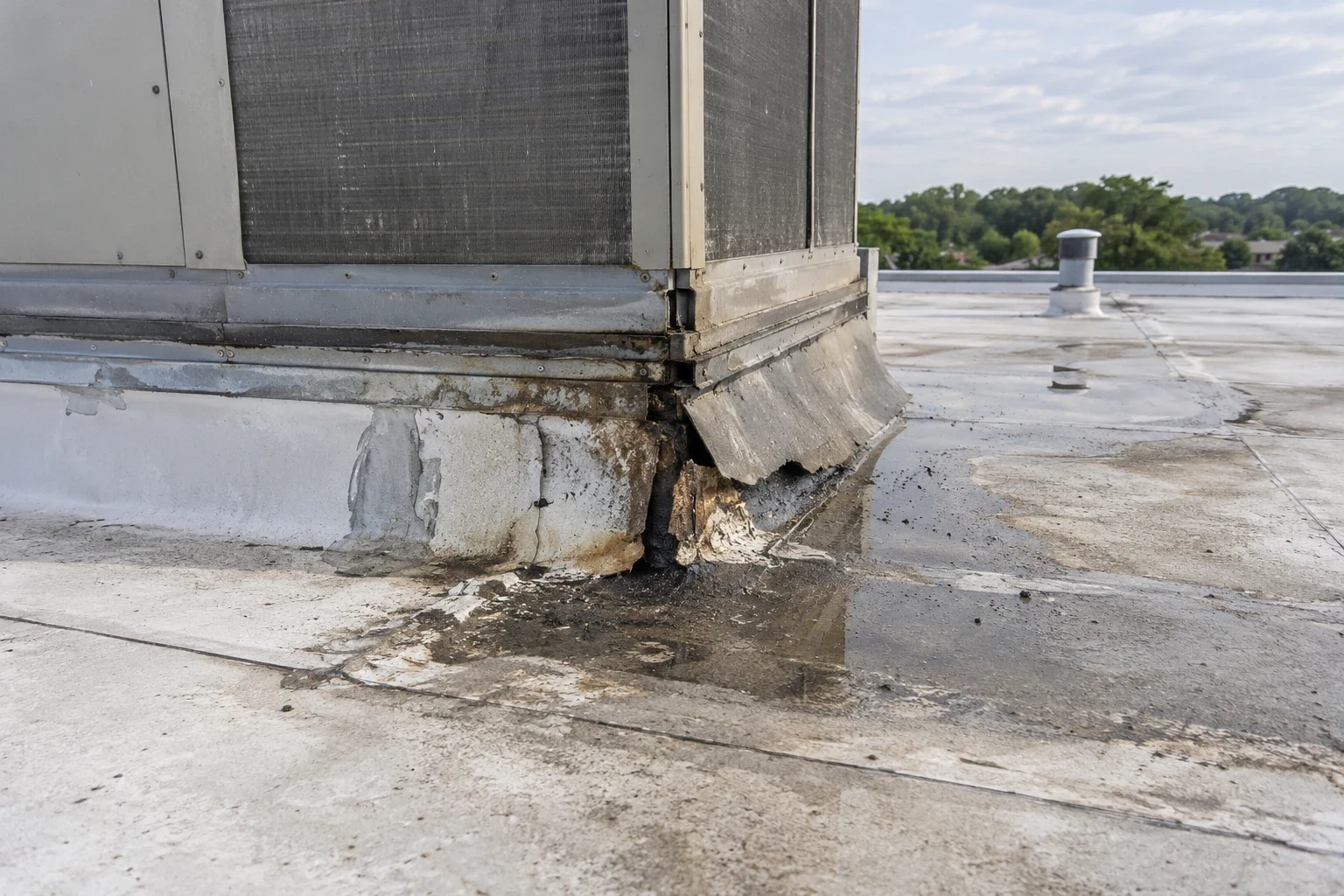
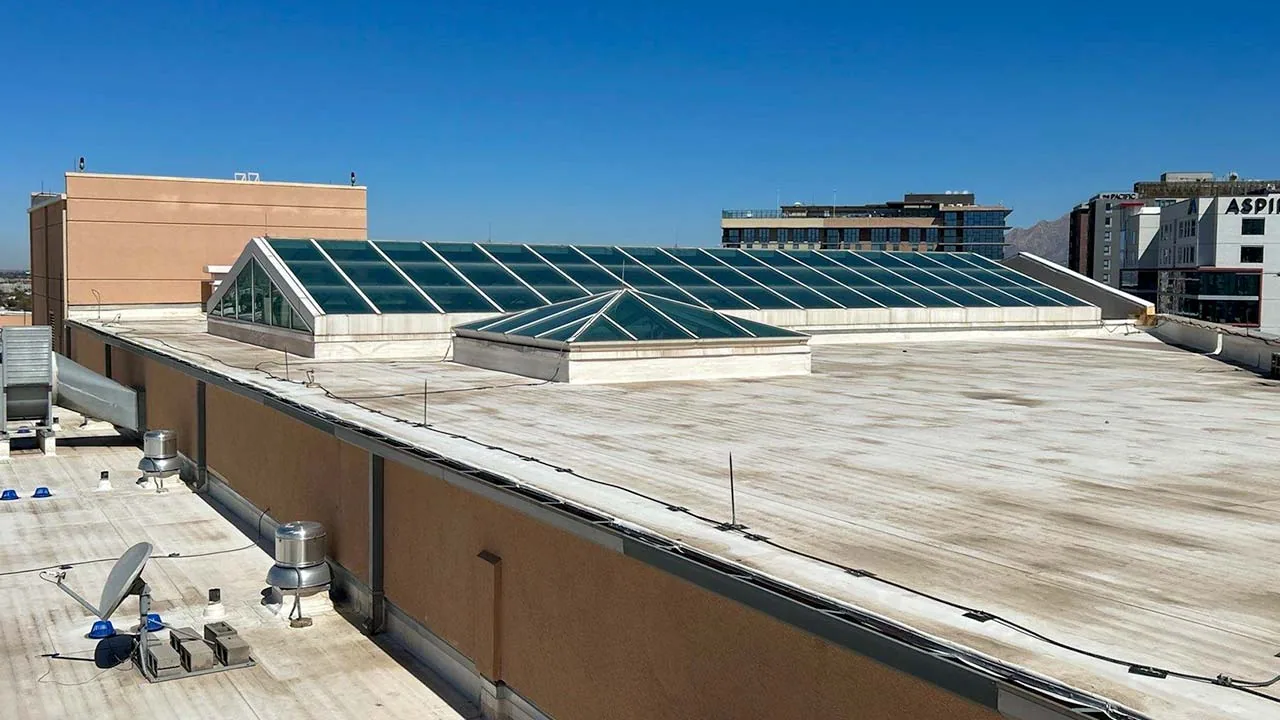
Commercial flashing can meet parapet walls, rooftop curbs, equipment bases, drains, skylights, expansion joints and perimeter edges. Each junction can fail differently. A lifted membrane leg, open termination, cracked sealant, loose counterflashing or corroded edge metal should be recorded as an observed condition, not condensed into a generic statement that the flashing is bad. We compare the vertical and horizontal sides of the connection and follow any visible route toward the reported interior area. The connection geometry determines whether roof flashing and penetration work can rebuild the entire junction.

The wall or equipment above a flashing can also be the source of movement or water. A roof repair cannot correct a leaking masonry joint, failed window perimeter or unsecured equipment base outside the roofing scope. We identify that dependency and arrange the affected connection so the right trade can restore its component before the roof is closed. If access does not allow the full termination to be seen, the proposal should preserve that limit and explain what additional opening would reveal. At a perimeter, our edge metal and coping repair scope should include its receiving support and termination.
Commercial Roof Flashing Failure Repair in Garland, TX

What must be removed before rebuilding the detail?

The permanent detail needs a surface and backing capable of receiving its specified materials. We inspect for wet insulation, damaged cover board, deteriorated nailers, loose fasteners, incompatible old patches and contaminants that may interfere with attachment. Removing only loose sealant can be appropriate for a defined maintenance task, but it is not equivalent to reconstructing a failed flashing base. If a test opening is required, the owner should approve its location and understand the protection and closure plan before removal starts.

For occupied rooms below, the building contact can identify access rules, sensitive interior areas and the person who can receive findings. We explain how the work area will be protected and whether a return visit depends on another component. A transition beside production or public space deserves clear location records; that does not justify assuming an operational schedule from the property type or neighborhood. When water is reported inside, our commercial roof leak repair investigation compares the stain with accessible roof pathways. If the roof sheet also separates, evaluate that joint as a roof seam failure repair rather than treating every gap as flashing.

Commercial Roof Flashing Failure Repair in Garland, TX

How do material and termination shape the permanent correction?

The repair must match the existing roof system and the configuration of the junction. A single-ply membrane may require a compatible flashing sheet, attachment and sealed termination; an asphaltic system uses its approved reinforcing and ply details; metal counterflashing must be secured and arranged to shed water over the base flashing. The intended detail also needs to account for movement between the deck, wall and projection. A patch that stops below a loose termination leaves the upper edge vulnerable. A nearby hole calls for a separate roof membrane puncture repair boundary and material decision.

Manufacturer details vary by system. GAF's RUBEROID manual directs installers to isolate roof assemblies from vertical walls and use counterflashing to divert water over base flashing. These are product-specific details, not universal dimensions for every Garland roof. We identify the actual membrane, wall construction and available height, then use the applicable manufacturer detail or project specification before determining the repair material and fastening pattern. A roof condition report can record which layers were visible and which remained concealed at the transition.

At a wall or curb, the repair must address both the roof-side base flashing and the surface that protects its upper edge. Remove material only far enough to expose sound, accessible surfaces, then rebuild the transition with compatible materials and secure terminations. If masonry, siding, or a curb has moved, coordinate that correction before closing the roof detail so the same movement does not reopen the joint.

What if equipment or wall work interrupts the repair?

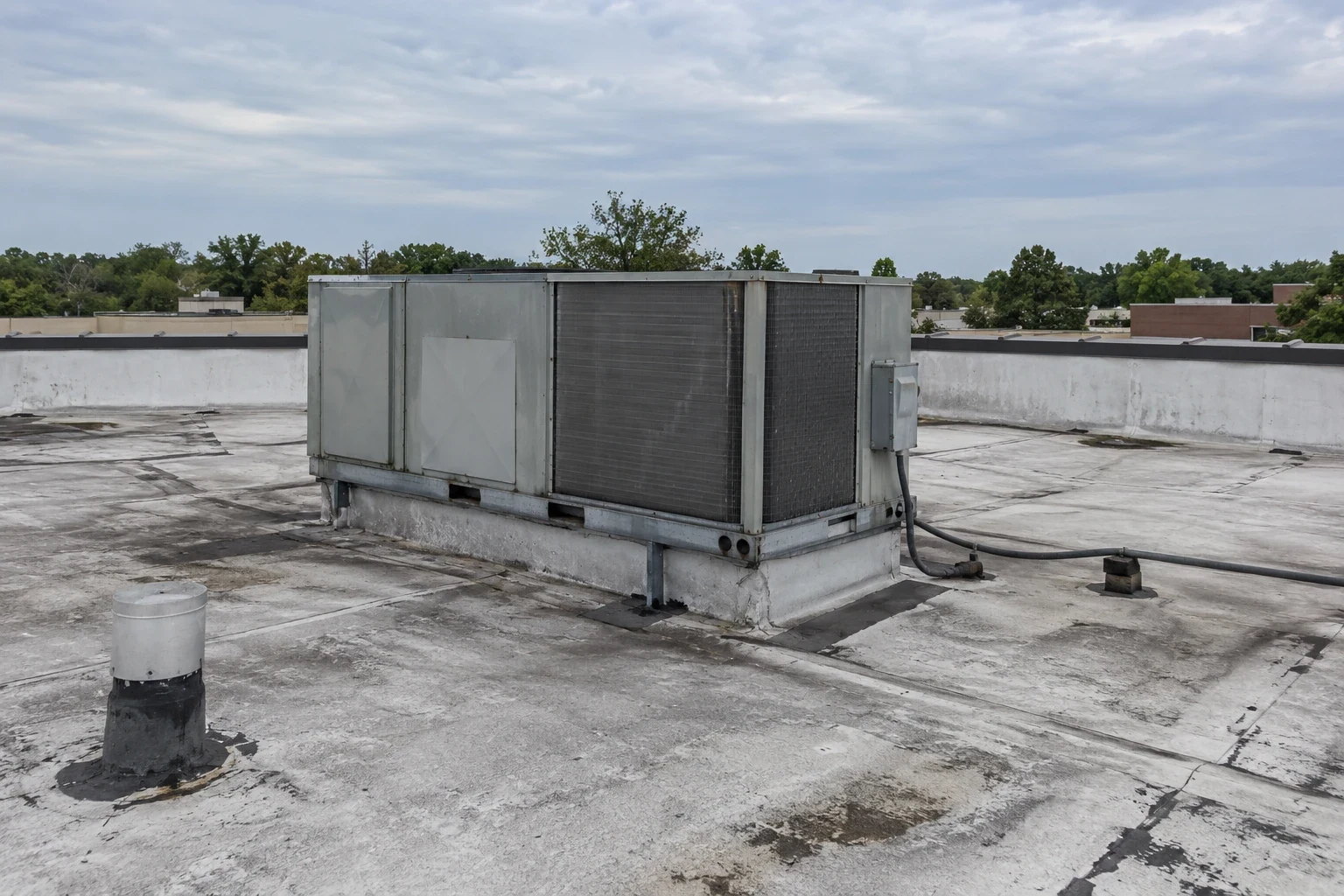
A curb may need equipment removed or raised before its flashing can be rebuilt. A parapet cap, wall cladding or electrical conduit may similarly require a separate trade. We identify the boundary where roofing ends and another scope begins, including who makes the component safe, how it will be returned and what roofing work must wait. If temporary protection is needed, describe it separately from the completed transition so the owner can track any return task. For a Downtown Garland site, confirm which entrance and escort arrangement reaches the affected wall or curb.

When the flashing failure appears with a seam opening or a puncture, inspect those conditions separately. A single repair boundary can include several defects, but each connection should be named so the scope does not leave an adjacent failure uncovered. If the membrane is wet or the deck is damaged, the repair extent can change after authorized removal. Photograph the exposed layer and document the proposed additional work before closing it. At Holford Recreation Center, identify the contact who can release the affected roof area.

Commercial Roof Flashing Failure Repair in Garland, TX

What should be checked before the repair is called complete?

The completion review should follow the rebuilt detail across its base, vertical rise and termination, checking the connections included in the approved scope. We record material and location, note any adjoining wall or equipment task that remains with another trade, and identify limitations in areas that were not opened. A photograph of the closed flashing is most useful when paired with a wider view that lets the building contact find the same curb or wall again.

For an active leak, share the affected area, suspected transition, and authorized building contact. We inspect the wall, curb, skylight, or roof-edge junction and identify what must be removed to expose sound material. If temporary protection is needed before a permanent detail can be completed, its location and limits are recorded separately.

Commercial Roof Flashing Failure Repair in Garland, TX

Common Questions

Can sealant alone repair a failed flashing?

Only if the examined condition and specified system call for that limited maintenance operation. Loose attachment, damaged backing or a failed termination can require reconstruction.

Why inspect the wall above the roof flashing?

Water or movement may originate in wall cladding, masonry, counterflashing or equipment above the membrane connection. The roofing portion should be separated from other trades.

What if concealed material is damaged?

The repair scope should identify the additional removal, document the exposed condition and obtain approval for the changed boundary before covering it.

What helps prepare a flashing repair request?

Provide the address, the leaking room or roof location, known roof material, safe photographs and the building contact for access.

Commercial Roof Flashing Failure Repair in Garland, TX

Rebuild the Roof-to-Wall Transition

Tell us which wall, curb, skylight, or penetration is leaking or moving, and whether another trade controls the adjoining component. We will define the roof-side termination and the work sequence needed to rebuild a continuous transition.

Call 555-555-5555 or request a roof assessment.

Questions About Your Roof?

ServicesRoof SystemsProperty TypesIndustriesService AreasDamage RepairCapabilitiesManufacturersAboutRequest a Roof Assessment555-555-5555
Call us today555-555-5555