PVC Commercial Roofing in Garland, TX

PVC Commercial Roofing in Garland, TX

PVC Commercial Roofing

Roof Systems

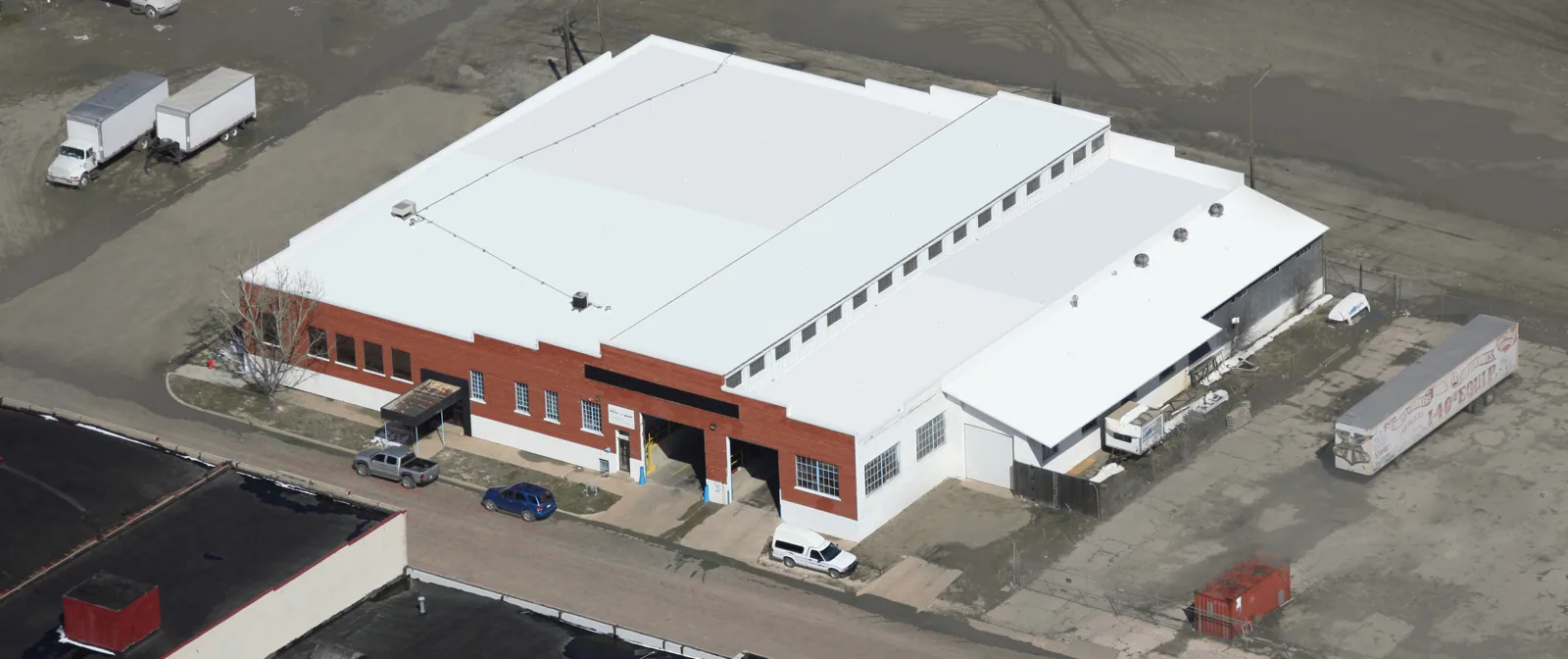
PVC roofing is a heat-weldable thermoplastic single-ply system, but the label does not tell an owner which formulation, reinforcement, attachment or chemical exposure the roof can handle. We review the existing construction, rooftop discharge and service use, then select a product and assembly whose instructions match those conditions. The important choice is not PVC in the abstract; it is the named membrane, insulation, attachment and detail package fitted to the building.

For a property near Valoris HealthPark or South Garland Library, bring the address, available roof records and any report of discharge or chemical contact to the review.

Forest/Jupiter serves the northeast Blue Line segment near manufacturing destinations. A PVC repair in that employment setting should be based on the product family, attachment, and compatible flashing detail verified at the building.

What does a PVC roof system include?

PVC is polyvinyl chloride formulated as a flexible roofing membrane, often with a reinforcement layer. The complete assembly also includes a compatible substrate, insulation or cover board, attachment, field membrane, perimeter and penetration flashings, and termination details. Manufacturers offer smooth-backed and fleece-backed options, different thicknesses and multiple attachment methods. Those components are not interchangeable simply because the finished surface is also called PVC.

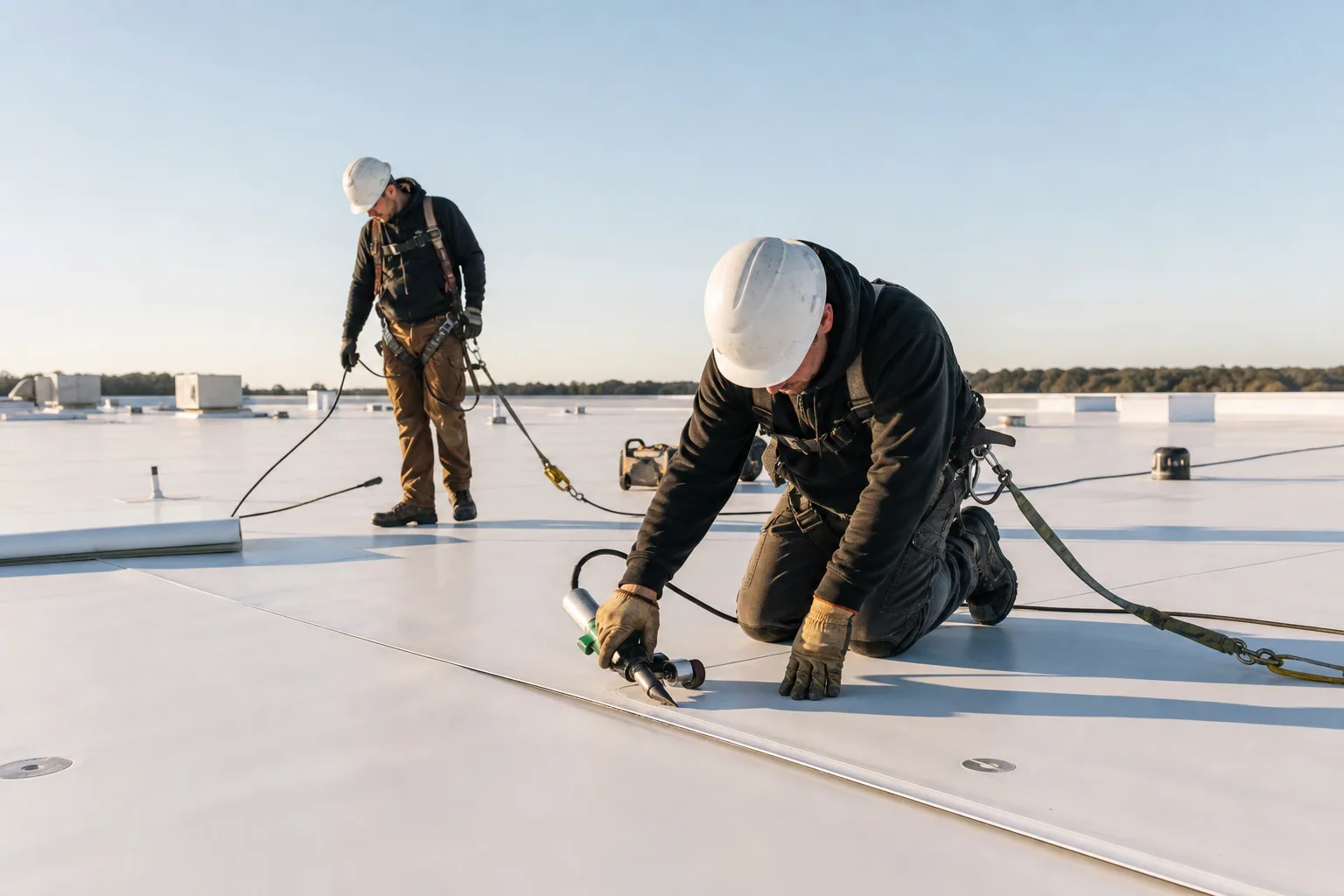
Heat-welded seams fuse prepared membrane surfaces, avoiding the seam-tape method common to EPDM, but the detail still depends on clean material, calibrated equipment and inspection. PVC KEE roofing adds a specific KEE polymer formulation within a PVC membrane family; the product data should identify exactly what is being proposed. TPO is another thermoplastic family, yet its chemistry and product approvals differ. Compare actual technical sheets, not only the broad category names.
PVC Commercial Roofing in Garland, TX

When does rooftop exposure make PVC relevant?

Where a building has exhaust, grease, oils, animal fats or industrial contaminants, identify the source, concentration, location and expected contact with the roof before selecting a membrane. Manufacturers publish product-specific chemical resistance information. Some PVC formulations are intended for particular exposure conditions, but performance depends on the named membrane and surrounding details. If a restaurant hood or process exhaust is involved, inspect both the roof surface and the route by which residue reaches it; do not infer a system need from the building type alone.

Any exposed area or recurring discharge should be explained to the product representative or design professional using actual substance information. Select compatible cleaners, walkway pads and flashing components from the same system requirements. If chemical contact varies by roof zone, map those areas and specify whether a product or protective detail changes at each transition. A roof-wide designation cannot substitute for a localized exposure assessment. TPO roofing can have different chemical-resistance characteristics, and a generic claim about one thermoplastic should not be transferred to the other.

Separate recurring discharge from a one-time spill in the site notes. Record the reported source, approximate route, affected roof area, date observed and any cleaning or maintenance already performed. This history helps the owner and product reviewer assess whether the condition is continuing and whether a localized protection or equipment correction belongs in the scope. Avoid naming a material based on residue appearance alone; confirm the substance with the responsible building contact before selecting a membrane or accessory.

PVC Commercial Roofing in Garland, TX

How should the assembly be attached?

Start with the deck and existing layers. A system may be mechanically attached through an approved board assembly or adhered using specified substrate preparation and adhesive. Fleece-backed membranes have their own adhesive and attachment requirements. Wind design, roof geometry, perimeter zones, deck pullout capacity and insulation configuration influence the fastening or bonding plan. A visual check cannot substitute for the project’s structural and assembly review.

The proposed work should identify board type, attachment pattern, membrane layout, required separation layers and any recover limitations. If an existing roof stays, inspect its attachment and moisture before treating it as a receiving surface. A roof insulation and cover-board scope should coordinate board joints with membrane attachment and details; a recover decision requires its own investigation.

Which roof details need particular attention?

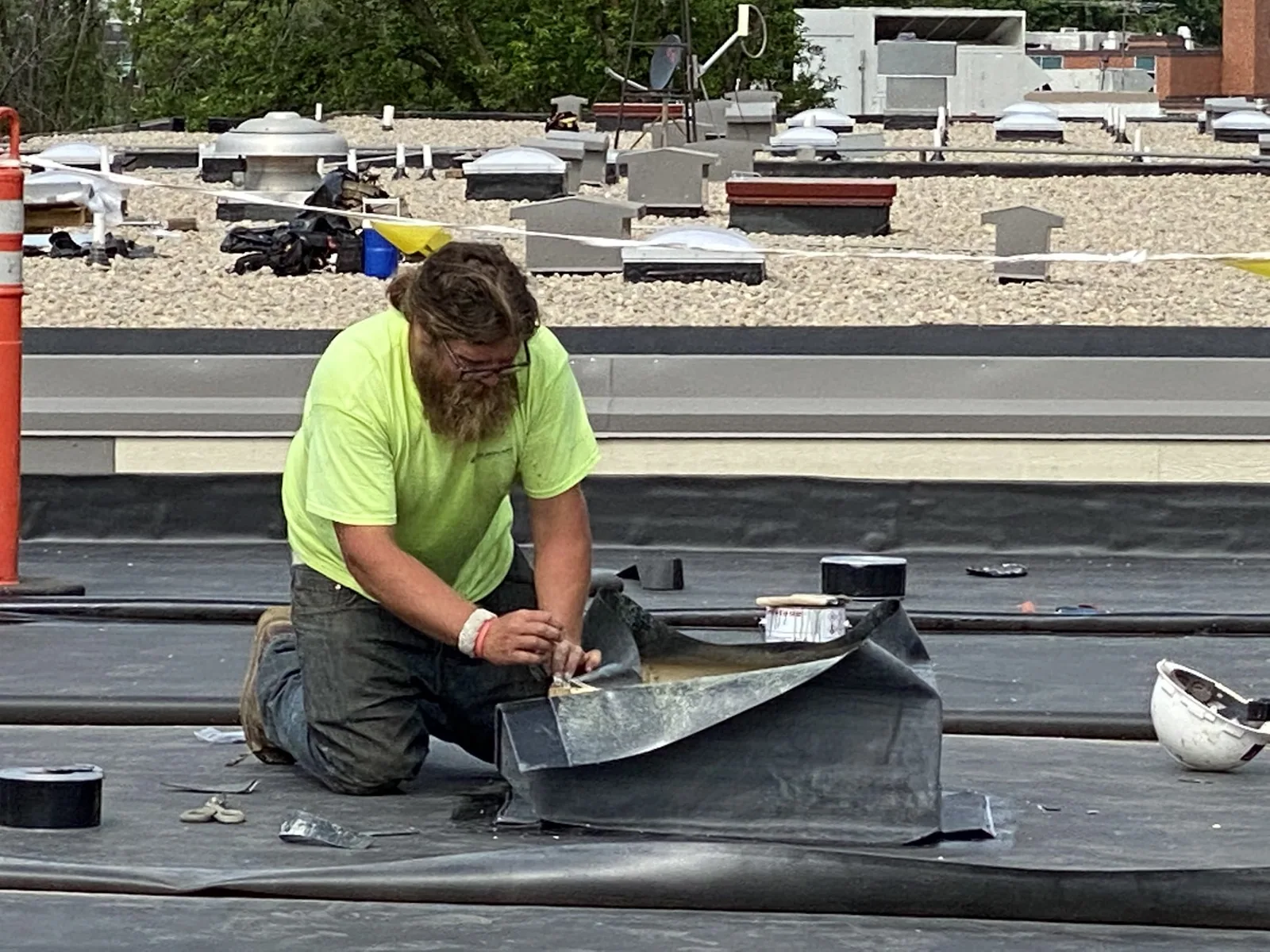
At seams, verify overlap, heat welds and intersections according to the manufacturer’s procedure. At pipes, curbs, drains and wall bases, use compatible preformed or field-fabricated flashings and complete the termination shown for the assembly. PVC-coated metal can be part of a PVC detail system, but ordinary painted or bare metal should not be assumed compatible. Expansion joints and roof-to-wall transitions need a design that accommodates movement while preserving a continuous tie-in.

Review service paths around equipment and outlets. Repeated foot traffic can wear a membrane, while blocked drains can leave water at a seam or curb. Define pads, access zones and drain work in the scope. If an outlet needs repair, coordinate roof drains and scuppers with the field membrane rather than treating the opening as a sealant-only task.

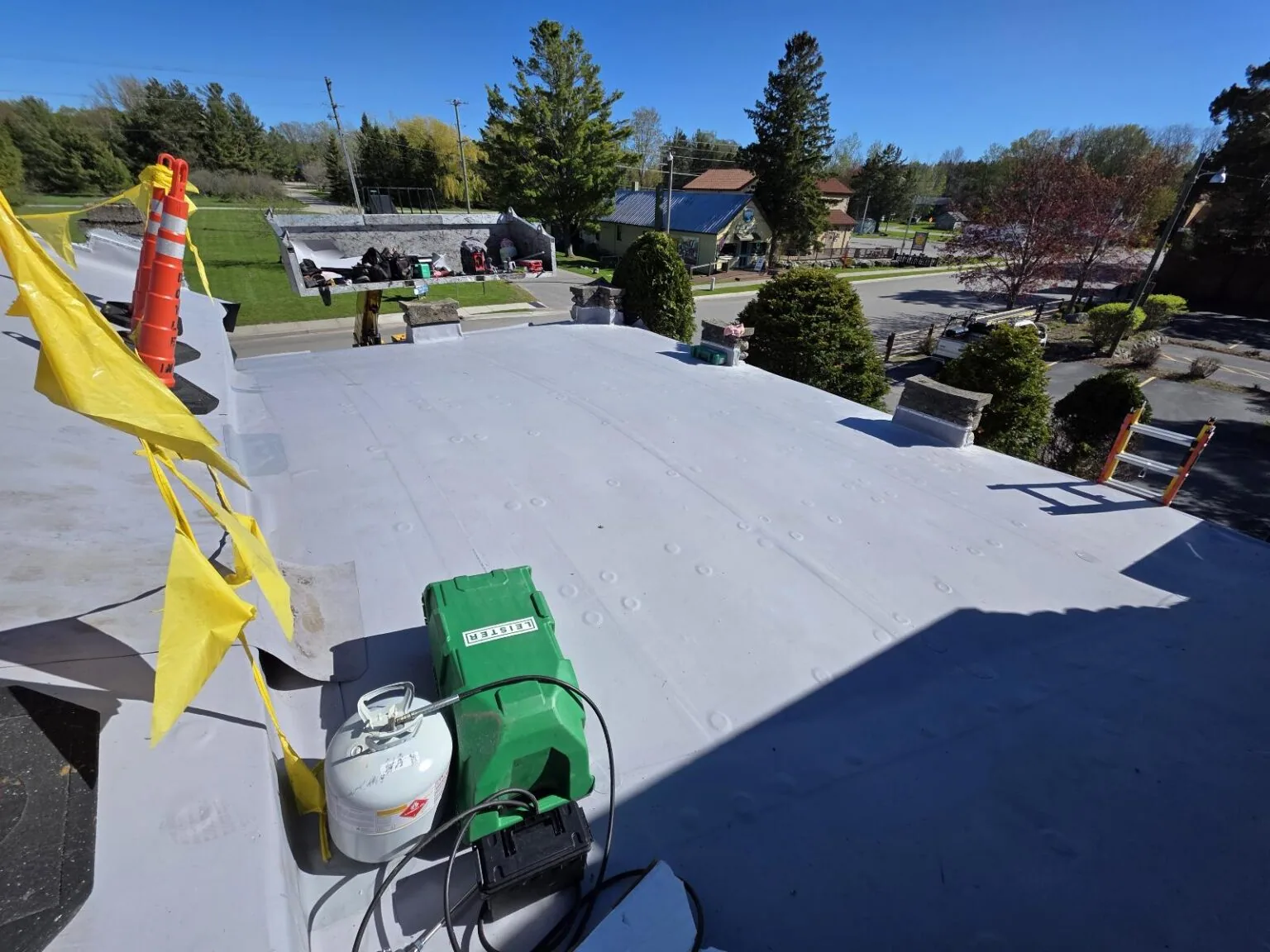
At curbs and penetrations, the membrane must turn up far enough for the specified flashing detail and remain clear of standing water, sharp edges, and equipment vibration. Confirm that cleaners, sealants, and adjacent materials are compatible with the selected PVC system before they touch the sheet. Where a pipe or unit is scheduled for later service, leave a clear record of the flashing boundary and the party responsible for restoring it after access. Probe the completed welds after they cool and photograph corners, drain connections, and perimeter terminations in context.

PVC Commercial Roofing in Garland, TX

How should owners compare PVC with other options?

PVC may be worth evaluating where a named product’s published resistance and system details match known roof exposure. EPDM may suit a different set of project priorities, while TPO, KEE, modified bitumen and built-up roofing each have distinct materials and methods. Compare installation, attachment, penetrations, rooftop activity, drainage, repair approach and lifecycle records for the actual products. Do not assume PVC is required because contaminants might be present, or that it is automatically better than another system.

Garland’s published Building Inspection information lists 2015 model-code editions effective September 19, 2016; the City advises commercial owners to confirm permit applicability for their project. Confirm current code and permit requirements for the address and scope. A commercial roof inspection can record observed layers and visible exposure, while the owner and design team decide whether sampling or further material testing is needed. When planning work in Garland, verify site access and delivery constraints with the building contact.

PVC Commercial Roofing in Garland, TX

What should the owner receive after PVC installation?

Record manufacturer, membrane type and thickness, reinforcement or backing, attachment, insulation and cover board, flashing materials, seams, drains and roof areas completed. Include approved details and product documents for future repairs. Photograph field seams, T-joints, curbs, pipes, edge terminations and any area excluded from the work. Keep warranty statements limited to terms actually issued for the installed assembly.

Provide the Garland address, known roof exposure, plans and reported concern. We can examine the existing roof, identify details needing resolution and compare PVC with systems that fit the same project requirements.

PVC Commercial Roofing in Garland, TX

Common Questions

Is PVC the same as KEE roofing?

KEE is a polymer additive used in some PVC membrane formulations. Confirm whether a proposal specifies standard PVC or a named KEE-enhanced product, then apply that product’s details and exposure ratings.

Are all PVC membranes resistant to the same chemicals?

No. Check the chemical-resistance data for the exact manufacturer and membrane, with the actual substance, concentration and contact pattern.

Are PVC seams taped or welded?

Typical PVC field seams are heat-welded, but preparation, equipment settings, overlap and inspection requirements come from the selected product’s current guide.

Can a PVC membrane be adhered to any deck?

No. Decks, insulation and cover boards must form an approved substrate, and attachment depends on the chosen assembly and project design.

PVC Commercial Roofing in Garland, TX

Match the PVC system to actual roof exposure

Provide the Garland address, roof records and any known rooftop discharge or process exposure. We can examine the assembly and identify product-specific compatibility, attachment and flashing questions.

Call 555-555-5555 or request a roof assessment.

Questions About Your Roof?

ServicesRoof SystemsProperty TypesIndustriesService AreasDamage RepairCapabilitiesManufacturersAboutRequest a Roof Assessment555-555-5555
Call us today555-555-5555