Modified Bitumen Commercial Roofing in Garland, TX

Modified Bitumen Commercial Roofing in Garland, TX

Modified Bitumen Commercial Roofing

Roof Systems

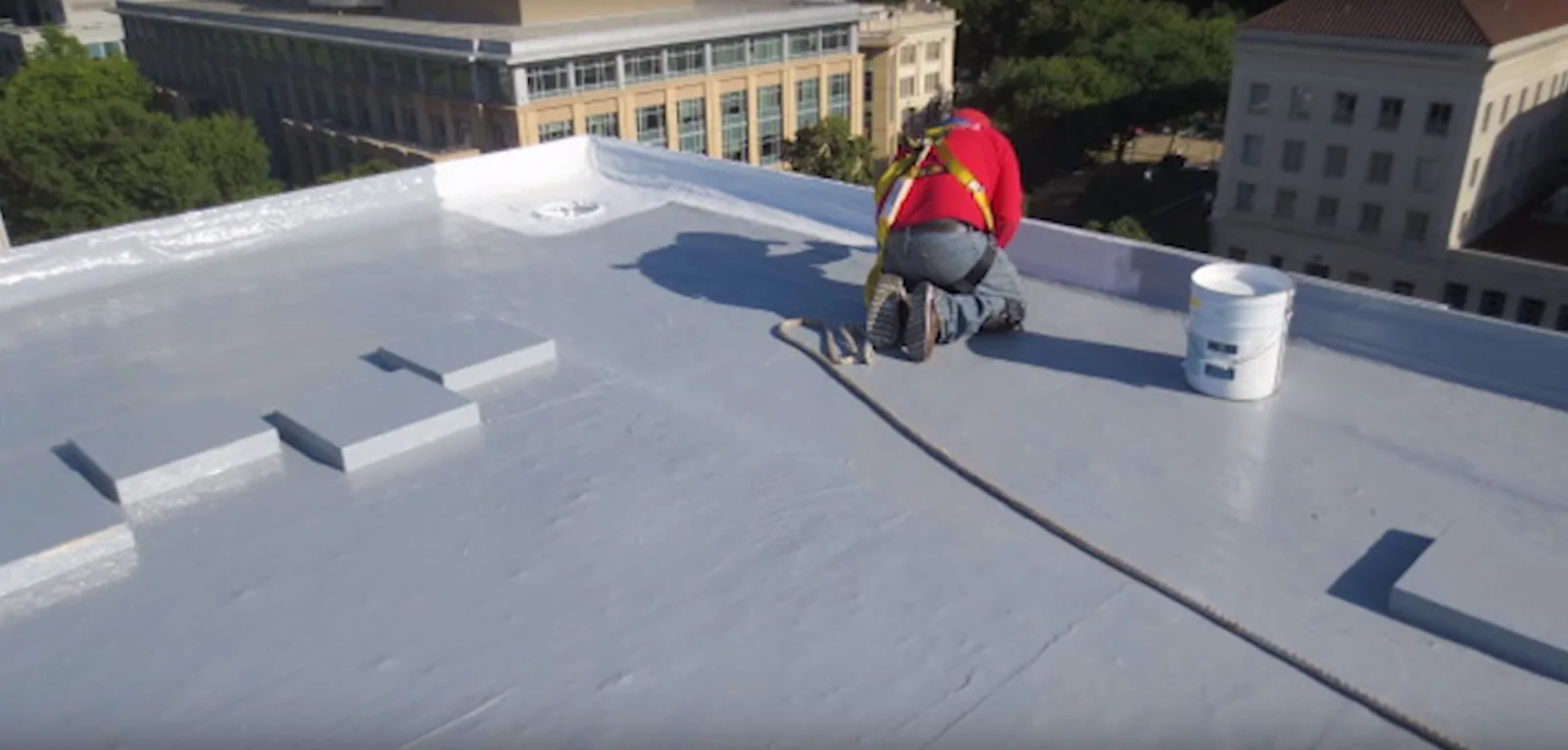
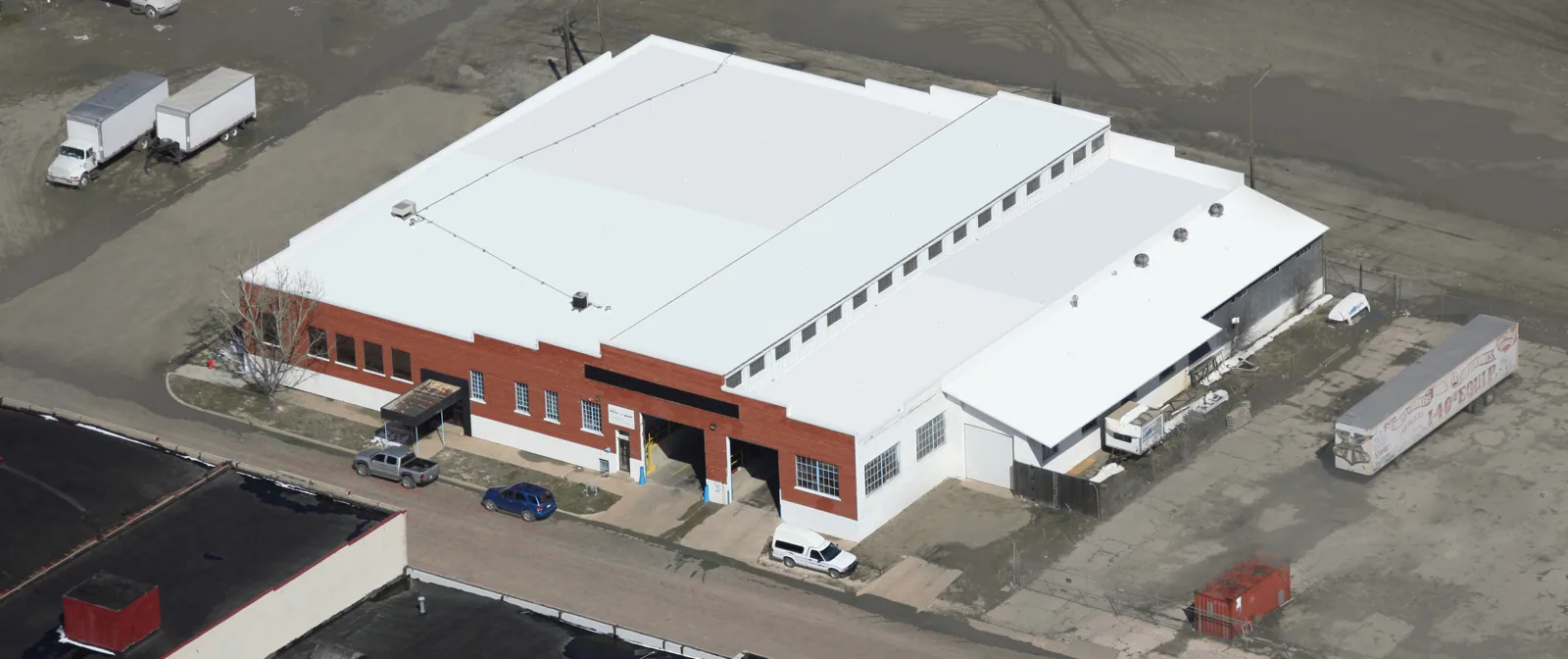
Modified-bitumen roofing uses asphalt sheets whose formulation and reinforcement are selected for a specified assembly. A scope may call for SBS or APP products, a base and cap sheet, one or more plies, and a defined method such as hot asphalt, cold adhesive, self-adhered or heat-welded application. The choice affects substrate preparation, fire controls, detailing and repair material. We identify the existing roof and intended construction before recommending a system.

For a commercial roof near North Garland Library or Firewheel Town Center, review the roof records, exposed layers and access route with the building contact before selecting a modified-bitumen repair method.

South Garland includes manufacturing and data-center activity, while West Walnut has its own small-area planning context. Before selecting a modified-bitumen detail in either area, verify the installed plies, substrate and permitted application method.

What does modified bitumen mean?

Modified bitumen is a bituminous sheet roofing family in which asphalt is modified with polymers and reinforced with materials such as fiberglass or polyester. Product lines commonly include SBS and APP formulations, but the names do not specify a complete assembly. A proposal should state the sheet, reinforcement, surfacing, ply arrangement and approved application method rather than listing only “mod bit.”

Built-up roofing also relies on bitumen and reinforcing plies, but its field construction alternates bitumen with reinforcing felts rather than relying on the same factory-made modified sheets. Both are multi-ply families; specific materials, methods and details distinguish them. A single-ply TPO roof is a different construction again.
Modified Bitumen Commercial Roofing in Garland, TX

How do SBS and APP choices differ?

SBS and APP are separate polymer modifications with different product characteristics and installation options. Reinforcement choices and permitted methods vary by sheet; verify the selected product and assembly before proposing heat welding, hot asphalt, adhesive or self-adhered installation.

The decision should account for roof slope, climate and system design, but it is not settled by broad “flexibility” or “heat resistance” labels. Review reinforcement, layer placement, surfacing and the transitions where the selected cap or flashing sheet will terminate. A product change can affect asphalt requirements, torch method, adhesive, fire precautions and sequencing, so it needs a written assembly update before installation.

Modified Bitumen Commercial Roofing in Garland, TX

What should be checked below the new sheets?

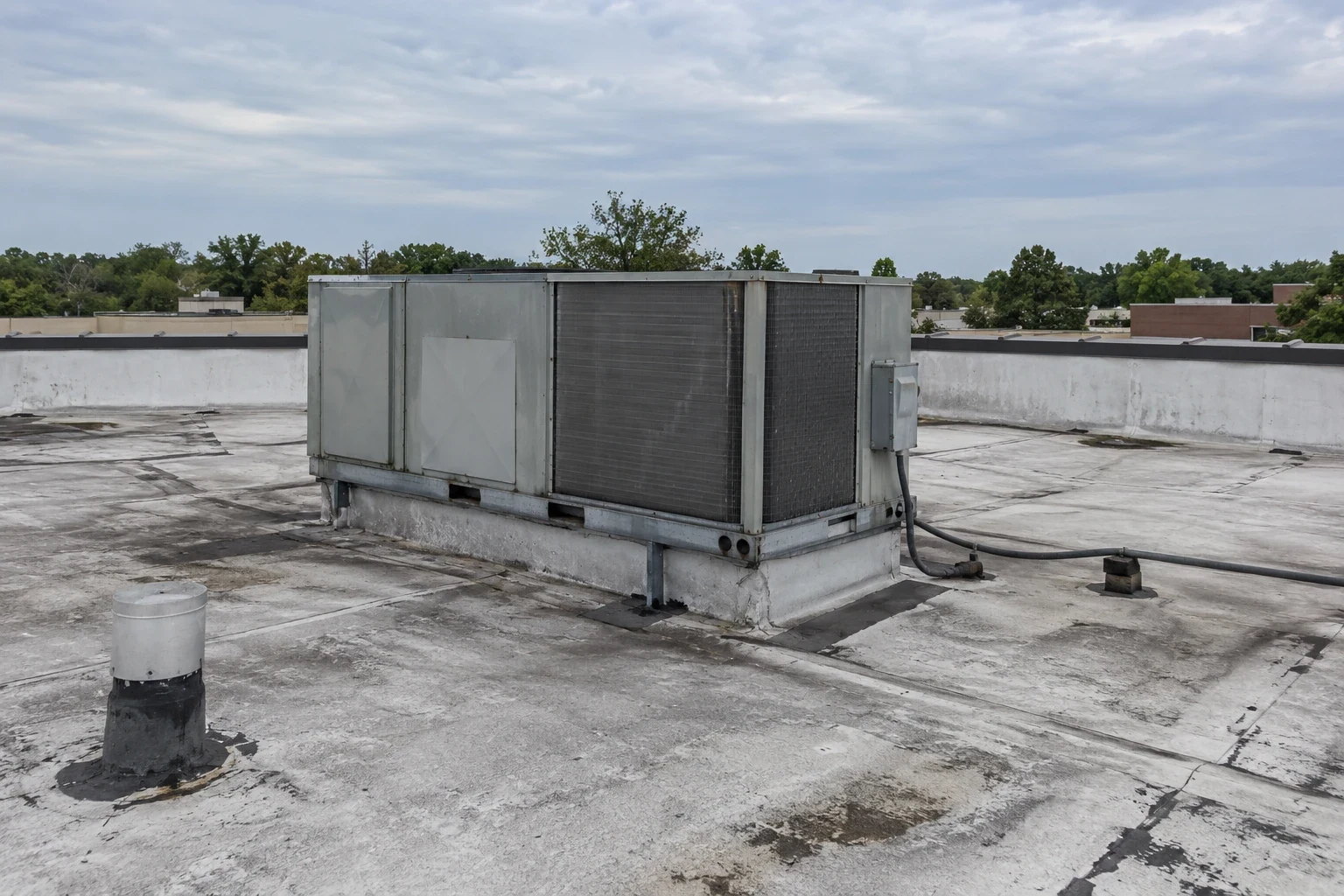
Inspect the existing roof and deck for moisture, loose material, damaged insulation, unstable cover board and weak attachment. A modified-bitumen membrane cannot make a poor substrate sound. Identify where tear-off ends, whether a base sheet can attach to the deck, and how insulation, vapor control and cover board form the receiving surface. If test cuts are needed, locate and repair them before they become a new water path.

Confirm roof slope and drainage before installation. Low points, drains, scuppers and parapet transitions should be represented in the design; added thickness or a new base layer may change how flashing terminates. For a replacement scope, compare the required removal and rebuilding with a recover only after retained layers, load and system compatibility are evaluated. The roof insulation and cover-board scope should coordinate the substrate with the selected sheet system.

Which application method belongs in the specification?

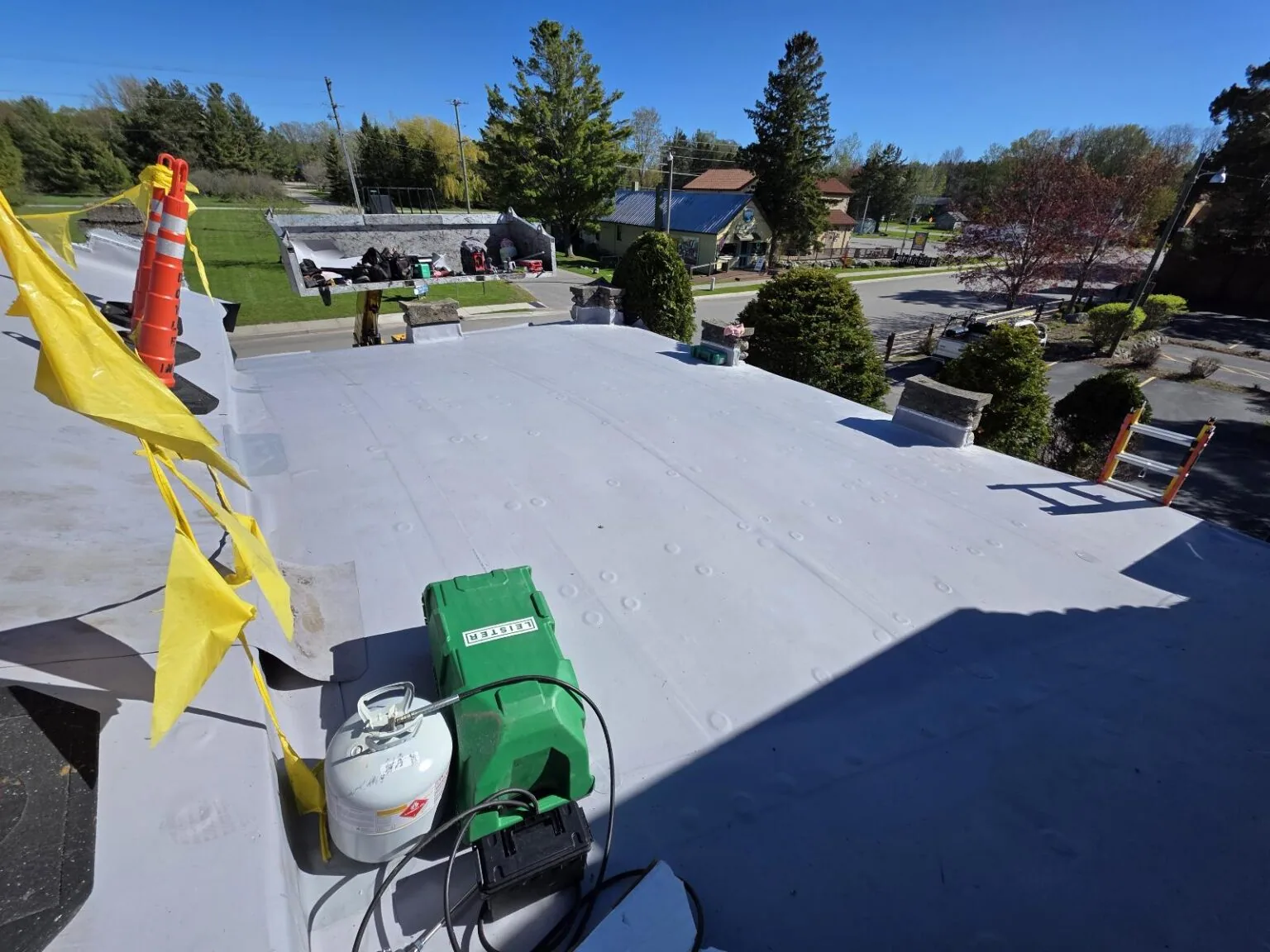
Hot asphalt, cold-applied adhesive, self-adhered sheets and heat welding are not interchangeable installation choices. The selected sheet and substrate determine the permitted method. If torch work is proposed, the project plan needs fire watch and controls for combustible construction and concealed openings. Hot asphalt grade and application temperature, or cold-adhesive coverage and cure, must match the selected assembly's requirements. Laps should remain clean and fully bonded, with end joints staggered where the approved detail calls for it. Protect new work from foot traffic until the surface has set.

Stage work so each sheet and lap receives its intended bond before materials or traffic interfere. JM’s current SBS guide warns against installation on wet surfaces and specifies a water cutoff at each daily stop for the described system. A cutoff is temporary protection and must be removed or incorporated as the details direct before continuing. Record the method and boundary in the proposal, especially where occupied operations or limited access affect the available work window.

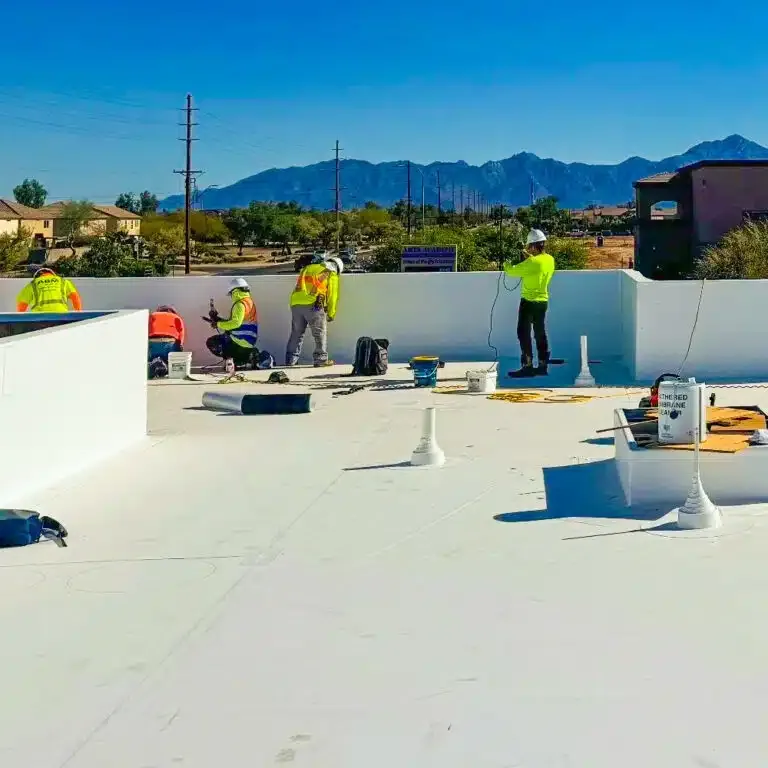
Heat-applied work requires a prepared surface, controlled torch path, and protection for combustible materials and occupied spaces. For cold adhesive or self-adhered plies, surface condition and temperature still affect bond and handling. The specification should identify the method by roof zone, including how laps close at drains, walls, and equipment supports. We confirm that crews can stage rolls, kettles, or other approved materials without blocking the building's receiving route. A daily check records finished laps and any area left for a later dry-in.

Modified Bitumen Commercial Roofing in Garland, TX

How do plies, flashing and surfacing work together?

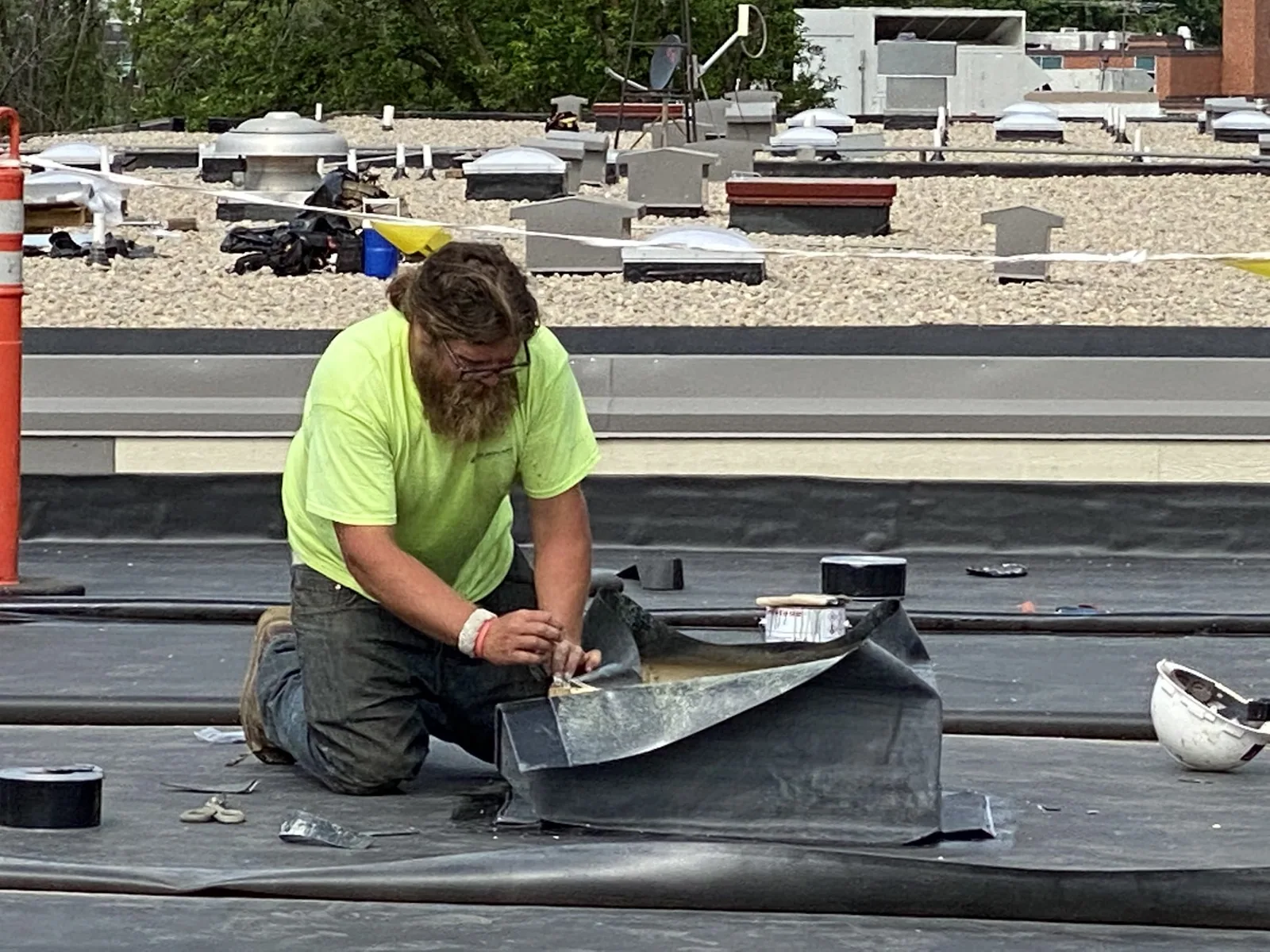
Base, intermediate and cap sheets perform different jobs in the assembly. Lay direction, lap staggering, reinforcement and interply bond must follow the selected specification. At curbs and walls, use the designated flashing sheets and compatible cement or asphalt, turning the membrane to a termination that can resist water entry. Drains, scuppers, expansion joints and edge metal need details that tie to the same roof assembly, not a field patch improvised around the accessory.

Surfacing may be granules, aggregate, coating or a product-specific exposed sheet. It affects protection and maintenance but cannot correct weak interply adhesion or open flashing. Detail the work around equipment and walk paths so service traffic does not tear new sheets or displace a freshly applied bond. See roof drains and scuppers and edge metal and coping where those roof transitions need separate repair.

Modified Bitumen Commercial Roofing in Garland, TX

When is a different system worth reviewing?

Compare modified bitumen with BUR where a built-up assembly may fit the design, or with EPDM, TPO or PVC when the owner prefers a single-ply membrane and its attachment method. Coating is a separate restoration option for roofs that qualify; it should not be used to hide saturated layers or failing flashings. The choice depends on existing construction, deck, access, exposure, project phasing, drainage and the complete detail set.

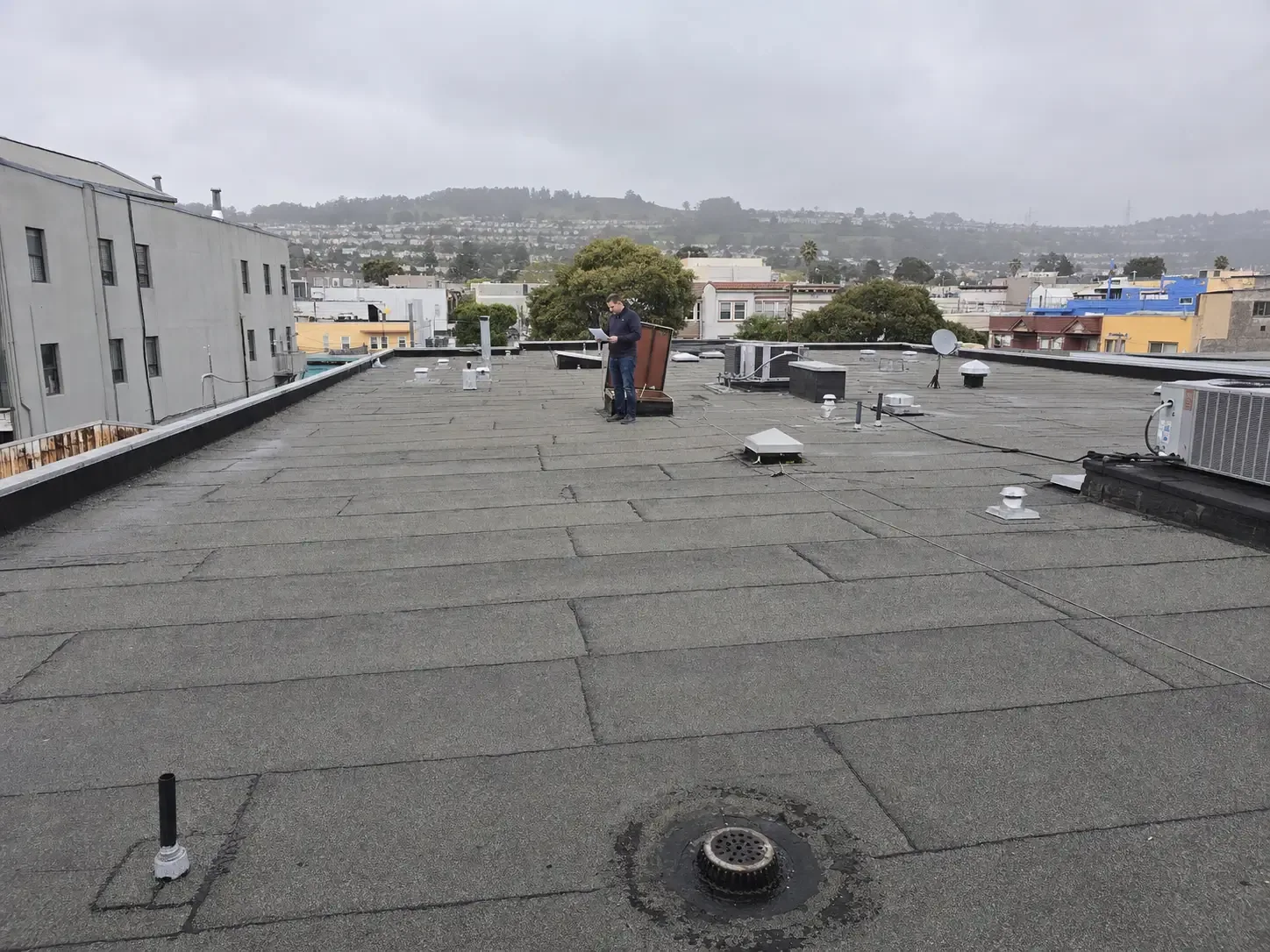
A commercial roof inspection can document accessible conditions and locate questions for test openings. Garland's 2015 model-code editions took effect September 19, 2016. For a specific reroof, confirm the permit path and applicable requirements with the project authority; the installation method still depends on the chosen roof assembly and work plan.

Near North Garland or Firewheel, schedule the review around the owner's roof records, access window and proposed system detail.

What belongs in the modified-bitumen closeout?

A useful closeout identifies the product, SBS or APP sheet, reinforcement, ply count, surfacing, attachment method, insulation and cover board, flashing and completed roof zones. Photograph laps, transitions, curbs, drains and tie-ins. Include approved substrate repairs, concealed conditions, areas excluded and the maintenance needed for that assembly.

Warranty terms depend on the issued project documents, installation and eligibility requirements. Review the issued project terms and eligibility conditions before relying on a warranty period. Provide the Garland address, roof records and concern so we can examine the assembly and explain which modified-bitumen configuration, if any, fits.

Modified Bitumen Commercial Roofing in Garland, TX

Common Questions

Are SBS and APP the same membrane?

No. They are different modified-bitumen formulations with product-specific reinforcements and application options. The specification should name the exact sheet and approved installation method.

Does every modified-bitumen roof use a torch?

No. The selected sheet may use hot asphalt, cold adhesive, self-adhered or heat-welded methods only where its system permits them. Confirm the allowed method before installation.

Can new modified bitumen cover wet insulation?

No. Wet or damaged layers should be identified and corrected according to the project design before they are covered.

What is the difference between modified bitumen and BUR?

Modified bitumen uses factory-made polymer-modified sheets. BUR is assembled with bitumen and reinforcing felts in multiple plies. The exact system layers still depend on its specification.

Modified Bitumen Commercial Roofing in Garland, TX

Compare modified bitumen with the existing roof

Provide the Garland address, roof records and reported concern. We can review the deck and layers, identify drainage and flashing conditions and compare specified modified-bitumen options with other systems.

Call 555-555-5555 or request a roof assessment.

Questions About Your Roof?

ServicesRoof SystemsProperty TypesIndustriesService AreasDamage RepairCapabilitiesManufacturersAboutRequest a Roof Assessment555-555-5555
Call us today555-555-5555