
How does an inspection connect the symptom to the roof?
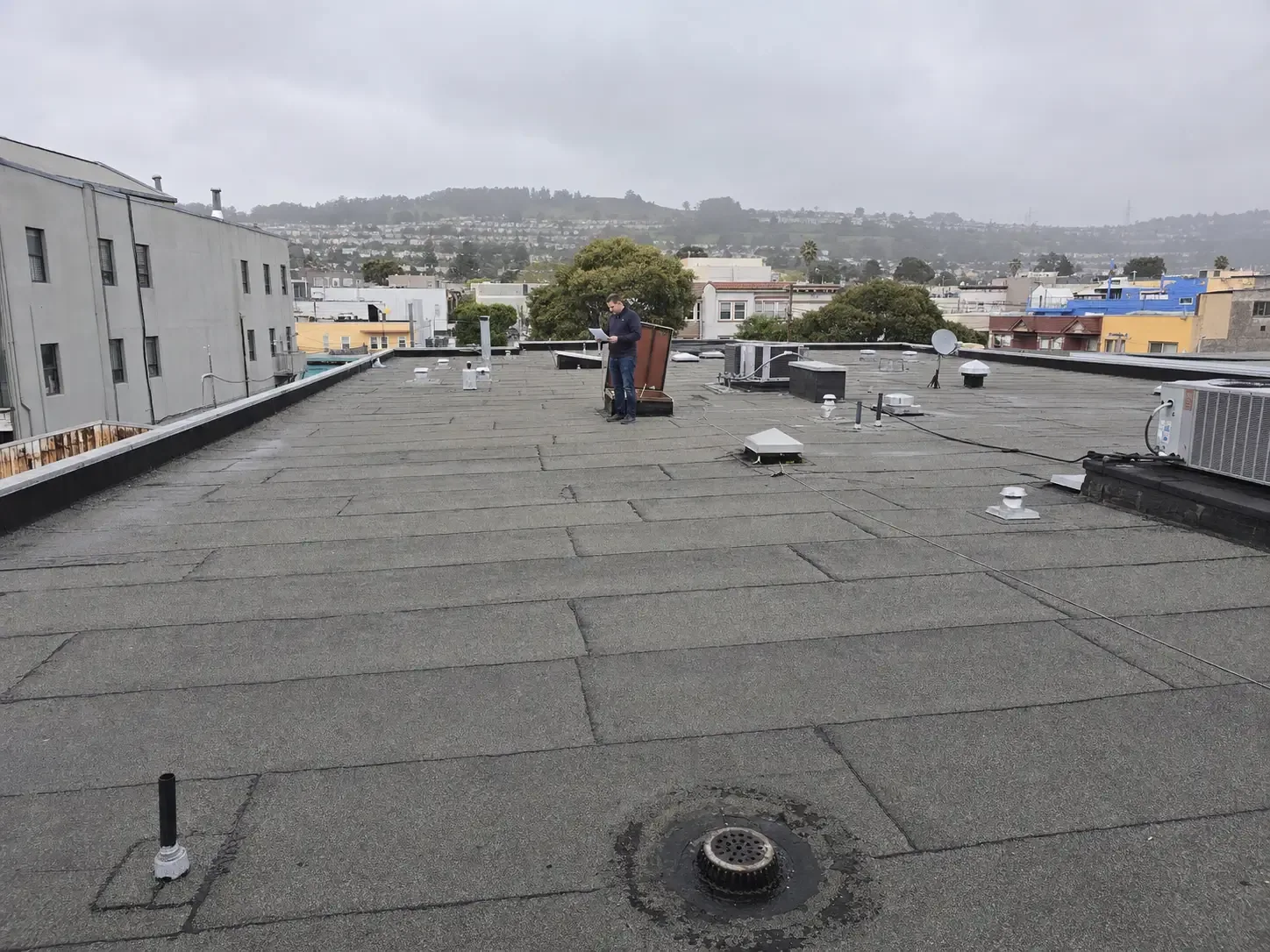
Start with the interior impact: room, equipment, ceiling area, and whether water is actively entering. Do not assume the wettest point sits below the failed flashing. Water may move under a membrane, follow a deck flute, or pass along a curb before it reaches an occupied area. Compare the interior location with roof transitions, outlets, penetrations, and prior patches. Mark the observed features on a roof plan or photograph that can guide a return visit.
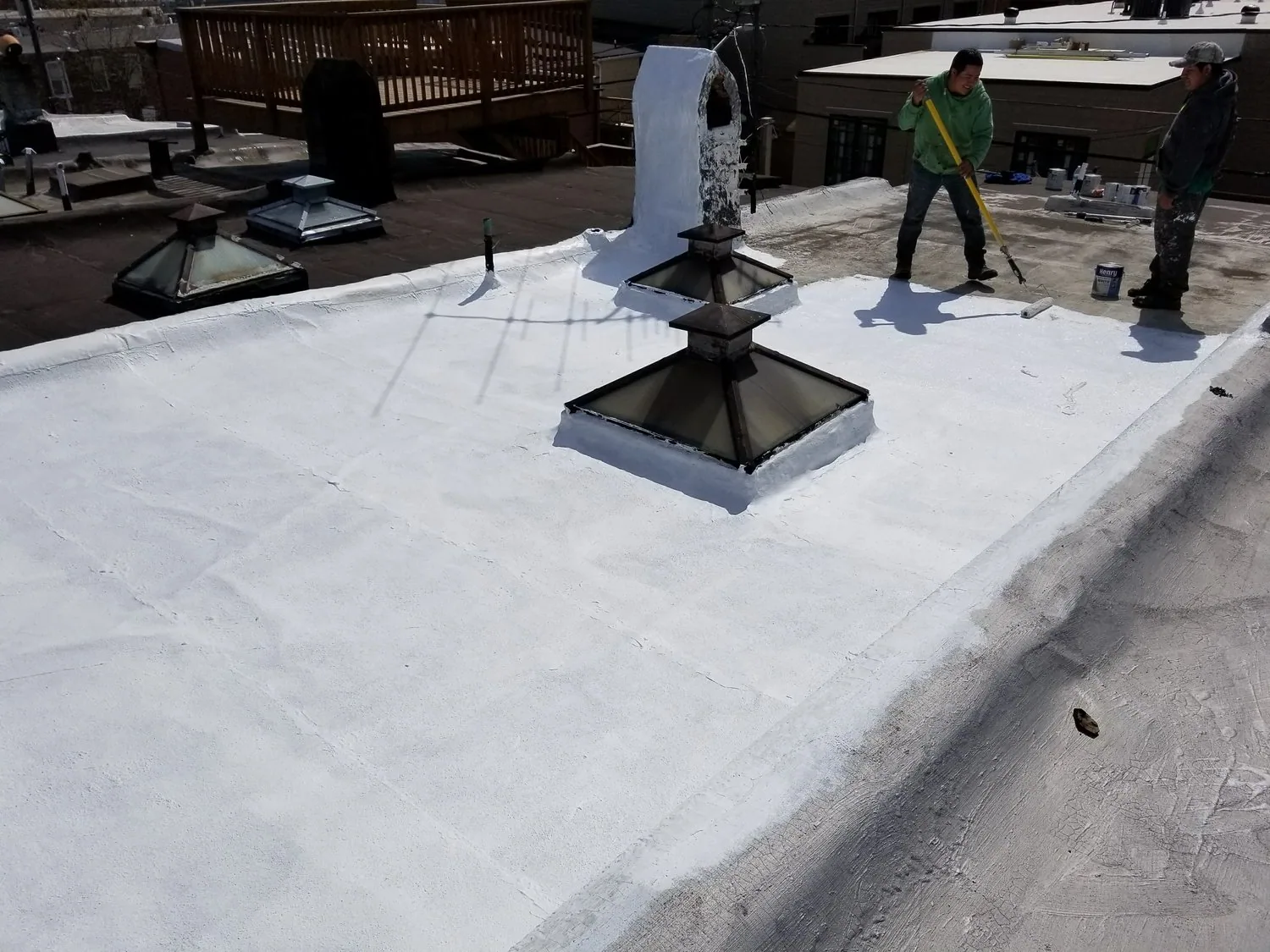
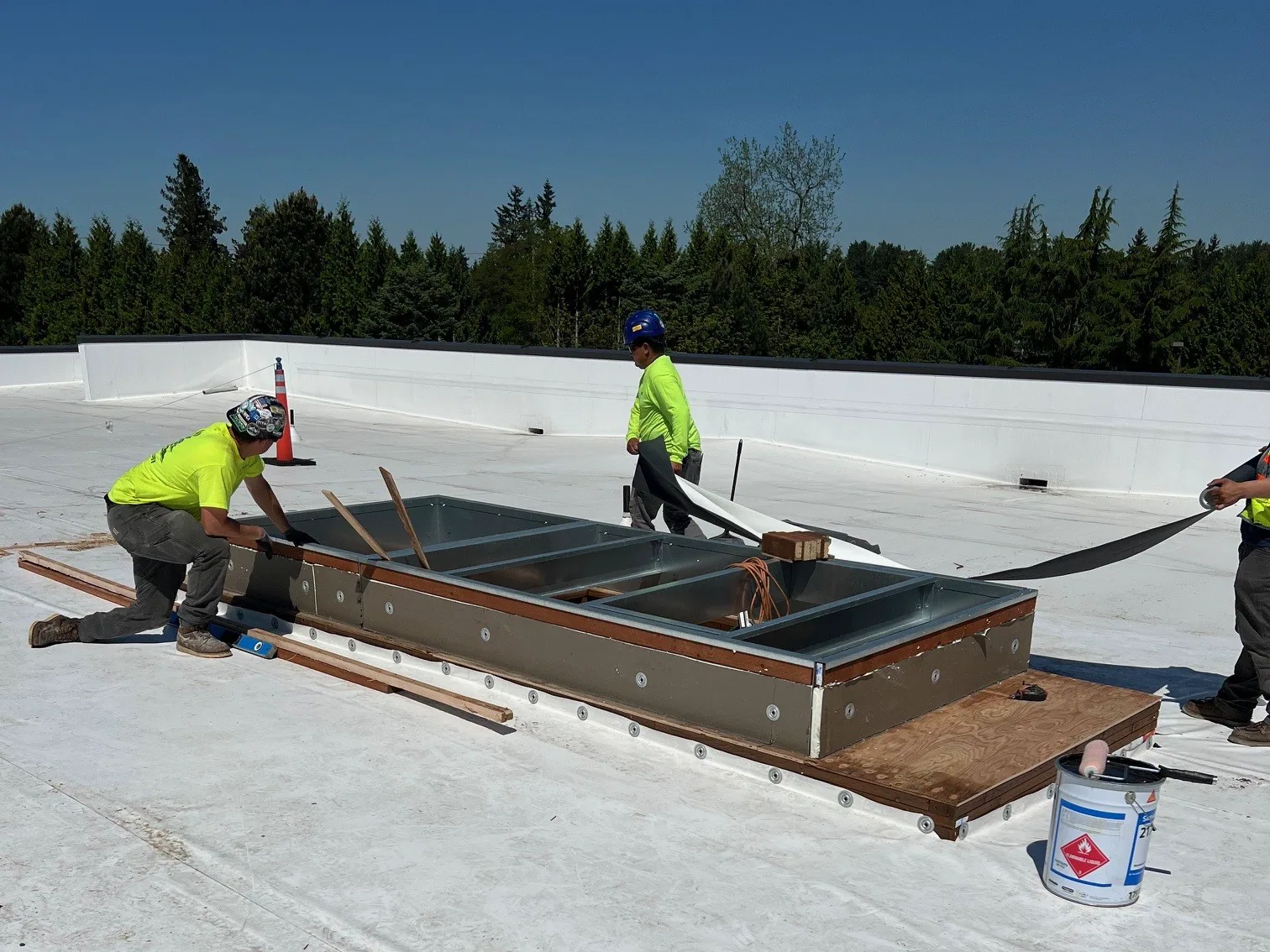
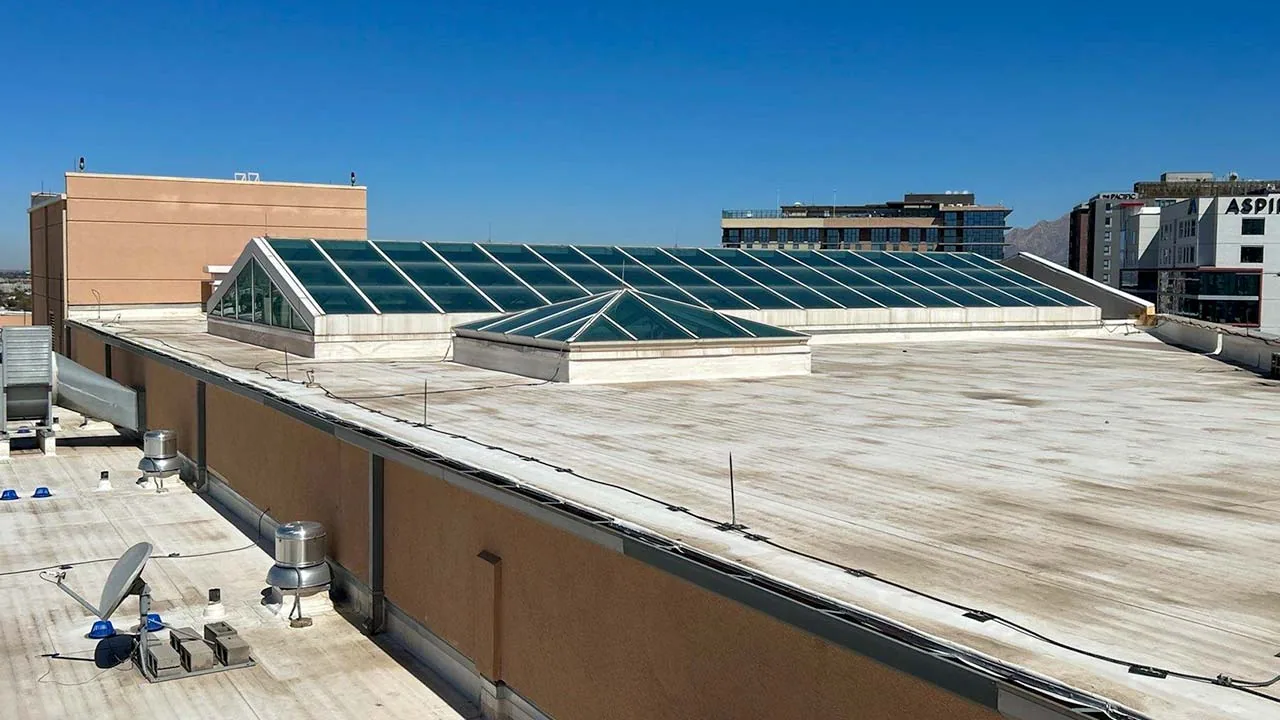
Inspect the roof covering directly above and around those features. Look for split seams, lifted laps, loose terminations, punctures, and degraded sealant. At a curb, examine the base flashing, corners, counterflashing, and any membrane seam that meets the curb. At a drain, check the bowl and flange as well as the field around it. Distinguish the condition from its likely cause until the visible details support that conclusion.
Richardson’s Innovation Quarter combines several employment and development uses across a large district. That fact does not identify a property’s tenants, access rules, or roof assembly. Obtain those details from the building contact and identify equipment that cannot be shut down or moved without a separate approval.