Commercial Roofing in the SH 66 Triangle, Garland, TX

Commercial Roofing in the SH 66 Triangle, Garland, TX

SH 66 Triangle

Service Areas

A split membrane at a curb can send water across a roof before it appears inside a business. In Garland, TX, the State Highway 66 Triangle is a city-recognized planning area, so the name gives an owner a useful geographic starting point. The roof decision still turns on the building’s actual assembly, the path water can travel, and the area that can be restored to a sound tie-in. We establish those points before expanding a repair.

For active entry, emergency roof repair can control exposure while the permanent correction is prepared. A commercial roof inspection can then record the affected zone, visible materials, and limits that matter to the approval decision.

What needs to be identified before a crew is dispatched?

Confirm the property address and the building contact first. Even within one planned area, a name or roadway does not identify the right roof hatch, tenant entrance, or affected unit. Ask what changed, where water appeared, and whether it is still active. A dated interior photograph can help locate a stain or drip, but the roof must be checked before the source or repair size is determined.

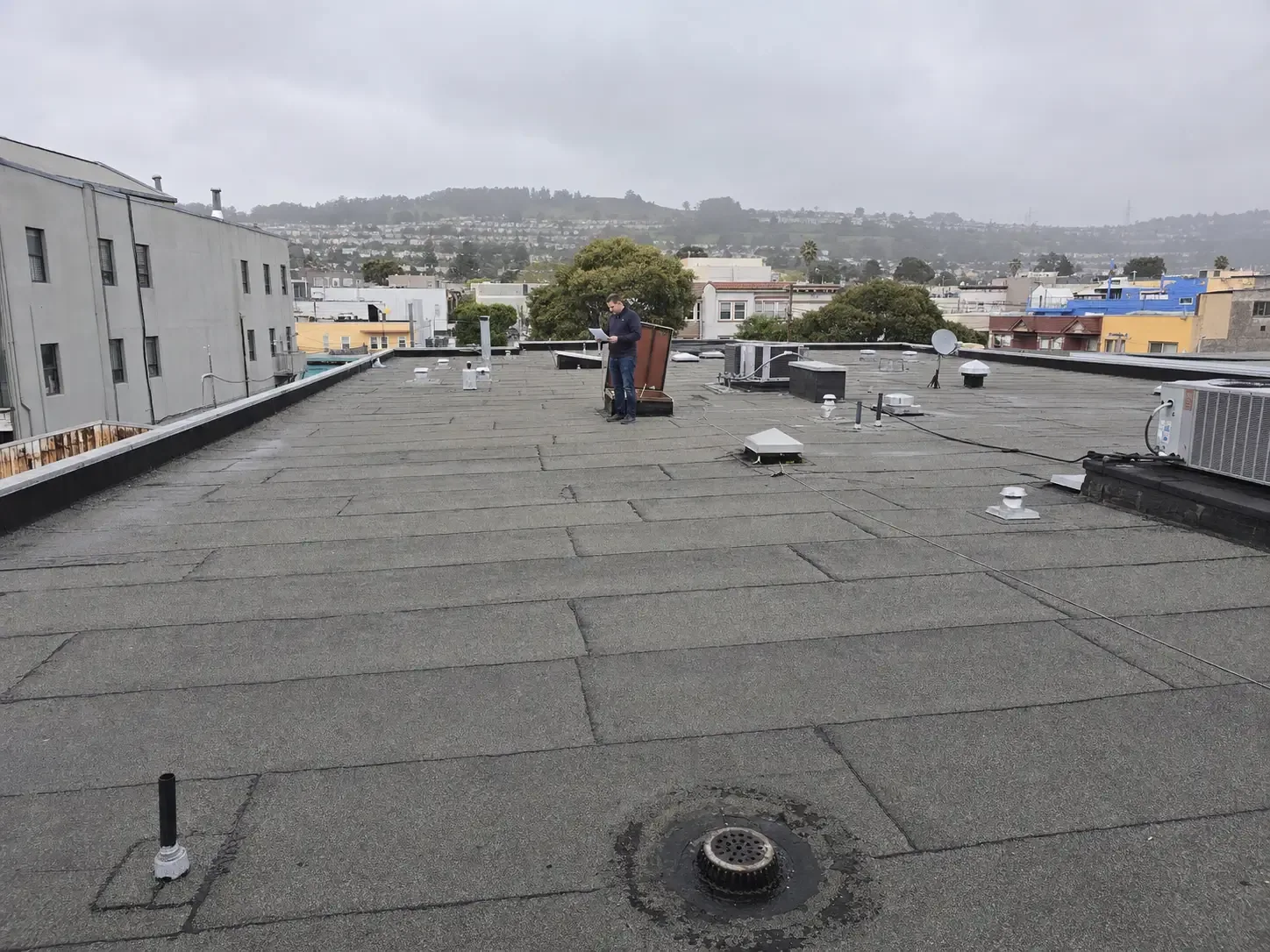
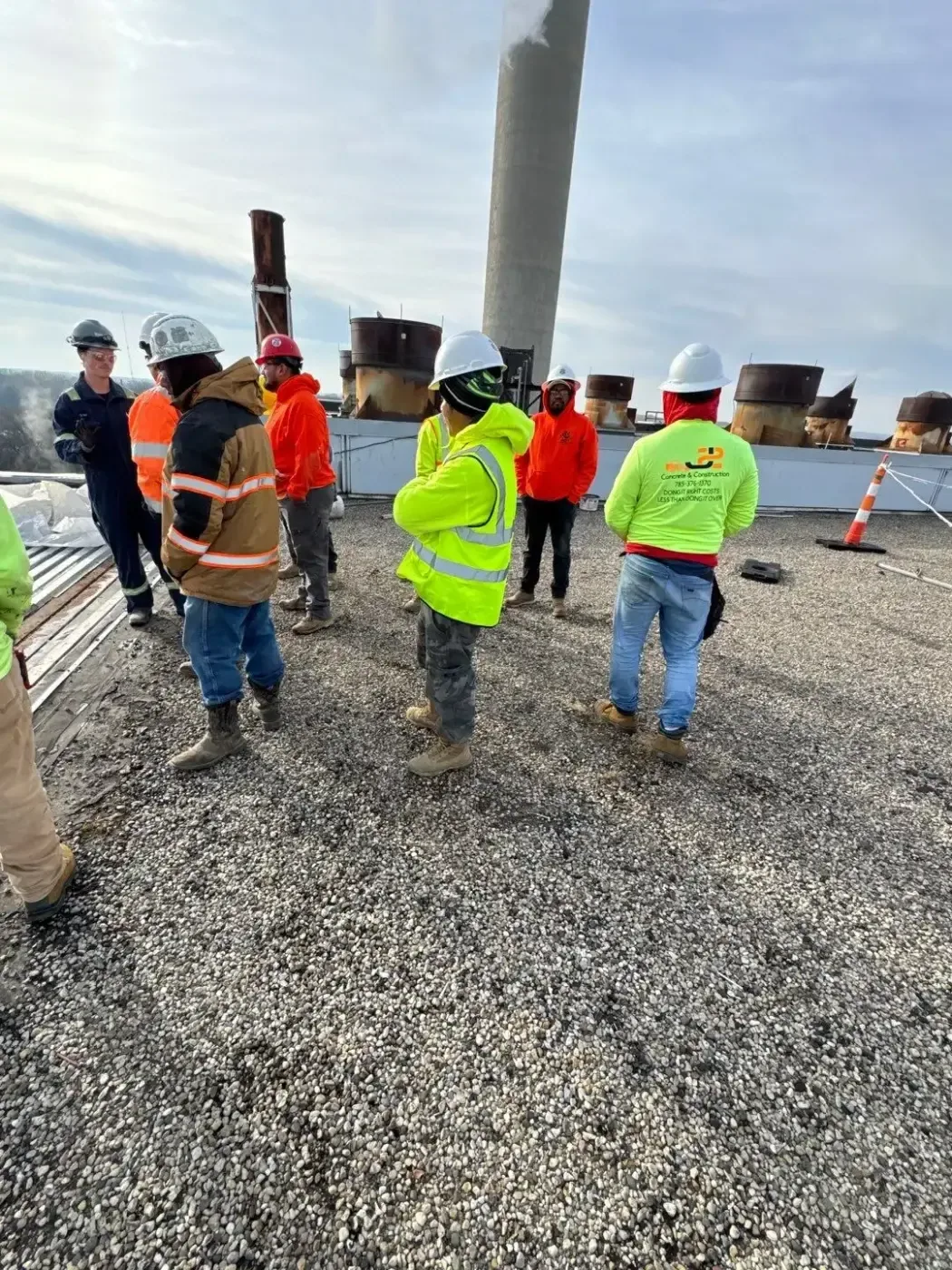
On the roof, mark the observed detail against a plan or fixed feature. Include the nearest drain, curb, parapet, expansion joint, and visible seam. This makes it possible to distinguish a puncture in the field from a failed wall termination or a drain connection. The crew should also note nearby rooftop equipment and penetrations that may require a separate trade before flashing can be rebuilt.

Garland’s employment base includes manufacturing and data centers; confirm the requested property’s use and operating constraints with its contact before planning roof access. Provide equipment shutdown limits, protected spaces and scheduled deliveries before dispatch. A clear dispatch starts with the named property and concern rather than an assumption about the district.
Commercial Roofing in the SH 66 Triangle, Garland, TX

How do heat and storms affect the inspection?

Dallas-Fort Worth summers place repeated heat and ultraviolet exposure on membranes, sealants, and exposed metal. A seam that is loose in one roof zone may sit beside a field that remains serviceable. Inspect the transition and the surface receiving the repair. Look for a lifted lap, brittle flashing, an open termination, or a fastener that has backed out. The detail and substrate determine whether a patch can bond or whether the work must extend to better material.

Spring and fall are the wetter seasons in the Dallas-Fort Worth region, with thunderstorms contributing rainfall. After a storm, check for displaced edge components, fresh punctures, debris at outlets, and water that remains after the surrounding roof has drained. A stain below the roofline can come from multiple paths, so compare its position with slopes, drains, and wall intersections rather than applying sealant at the nearest visible joint.

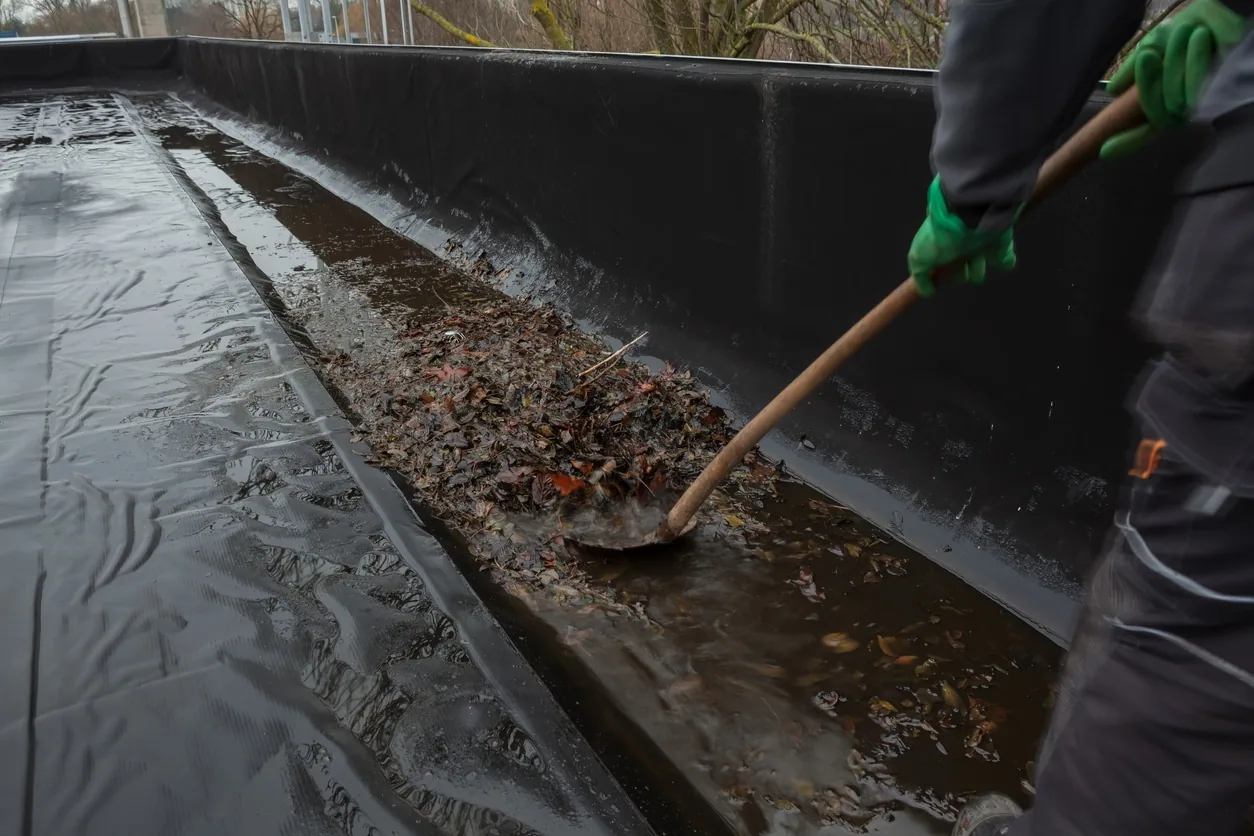
If the water path leads to an outlet, drain and scupper repair should state whether the work is limited to the fitting or includes surrounding membrane and slope. If moisture may continue below the surface, identify where an inspection opening is justified and what its closure requires. The owner can approve that investigation separately from the permanent repair.

Commercial Roofing in the SH 66 Triangle, Garland, TX

How can a repair be staged around an occupied property?

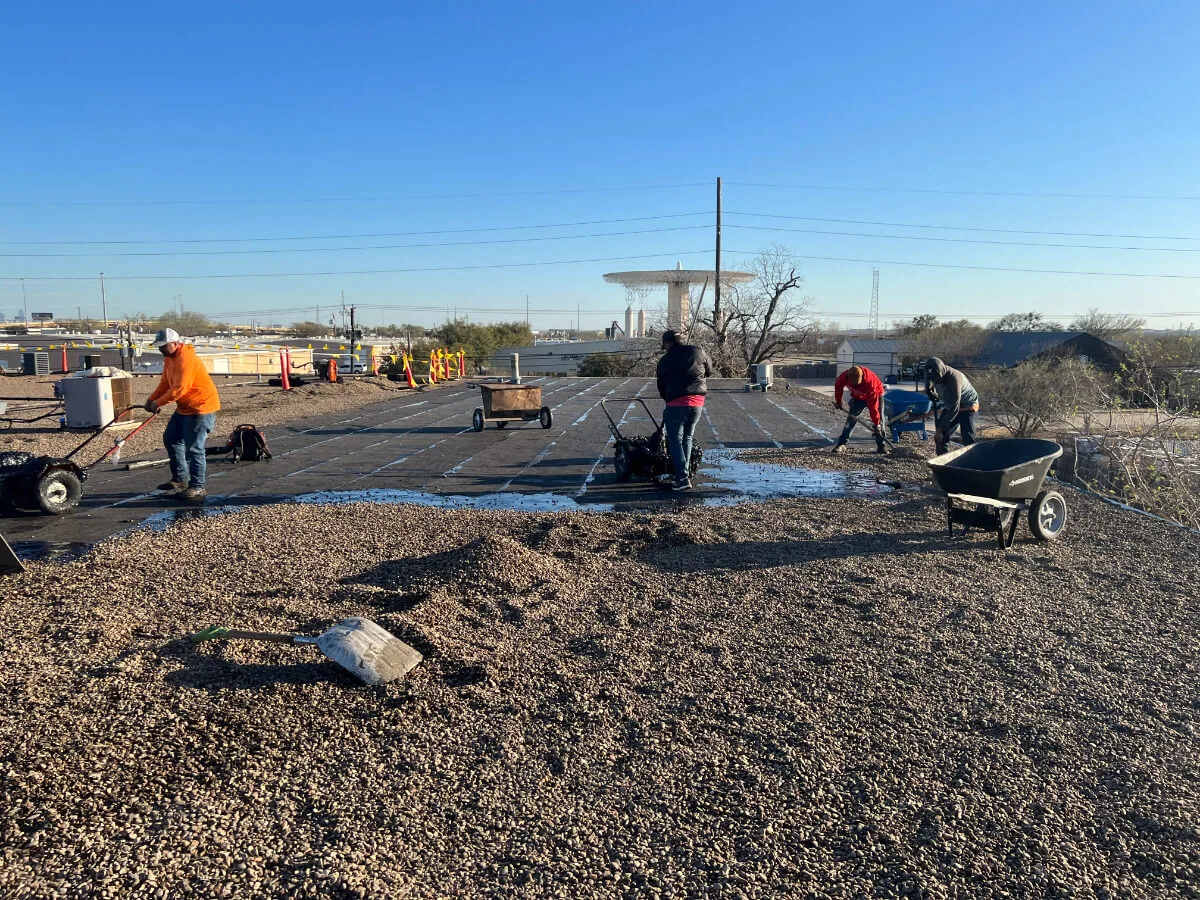
Divide the roof into work areas that can be protected and closed in sequence. State which section will be disturbed, how materials move to it, and what condition must be met before the crew leaves. Where the leak sits above equipment or a tenant space, agree on interior protection and any shutdown or escort requirement with the responsible contact. The city planning label does not supply those arrangements.

Temporary cover may be necessary if rain is entering and a permanent repair cannot be completed on the first visit. Record the material used, its edges, and the return condition needed before final closure. Do not let a temporary patch disappear into a later invoice as if the assembly had been restored. The owner needs a clear difference between reduced exposure today and a durable correction of the failed roof detail.

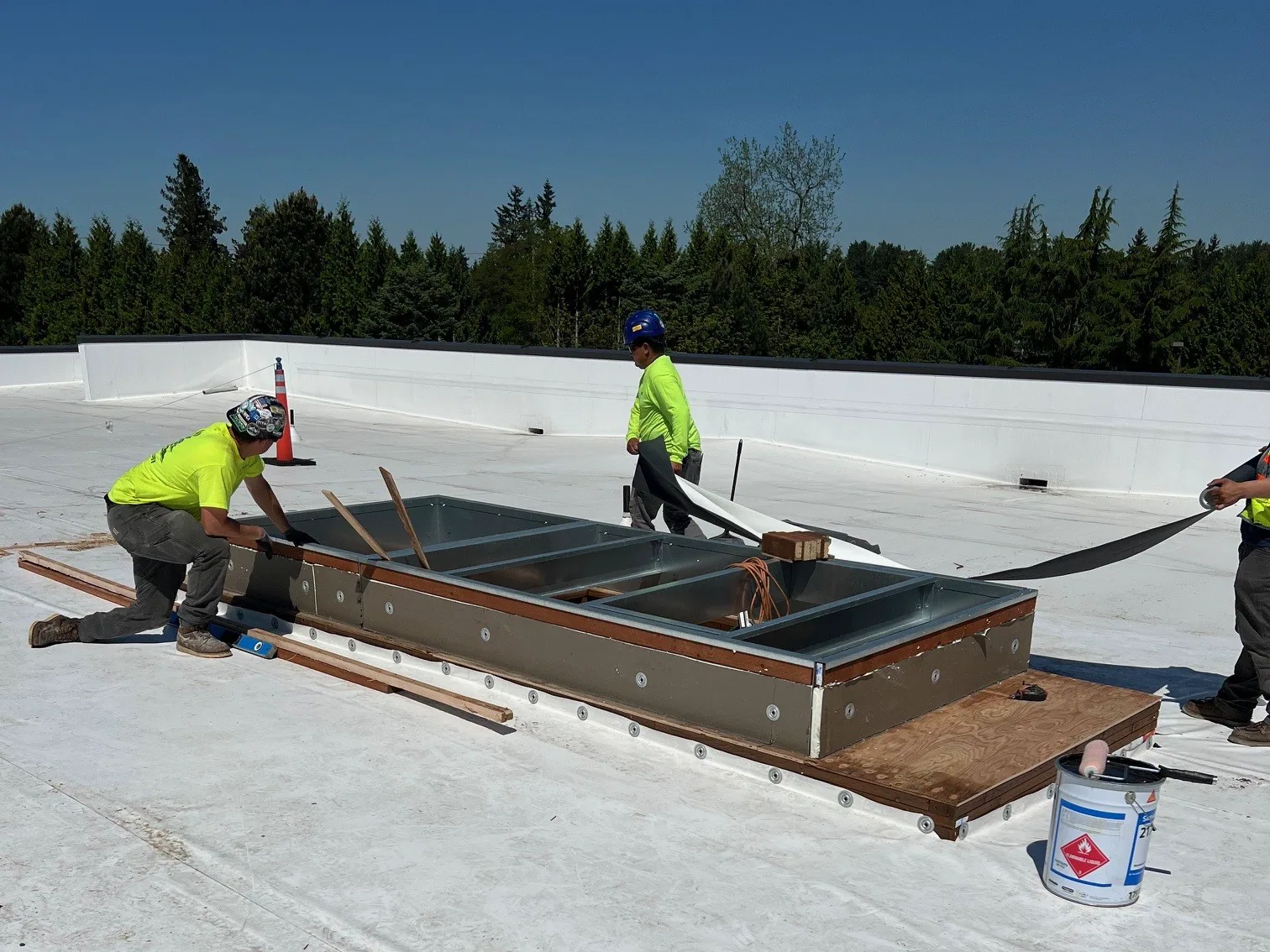
For a repair scope, commercial roof repair should identify the affected roof zone, the material removed, and the new detail that will reconnect it. If equipment blocks the flashing work, name that dependency and the party who must clear it. A defined stop point protects the work completed and prevents open edges from being left while another task is still unresolved.

How is a lasting material correction chosen?

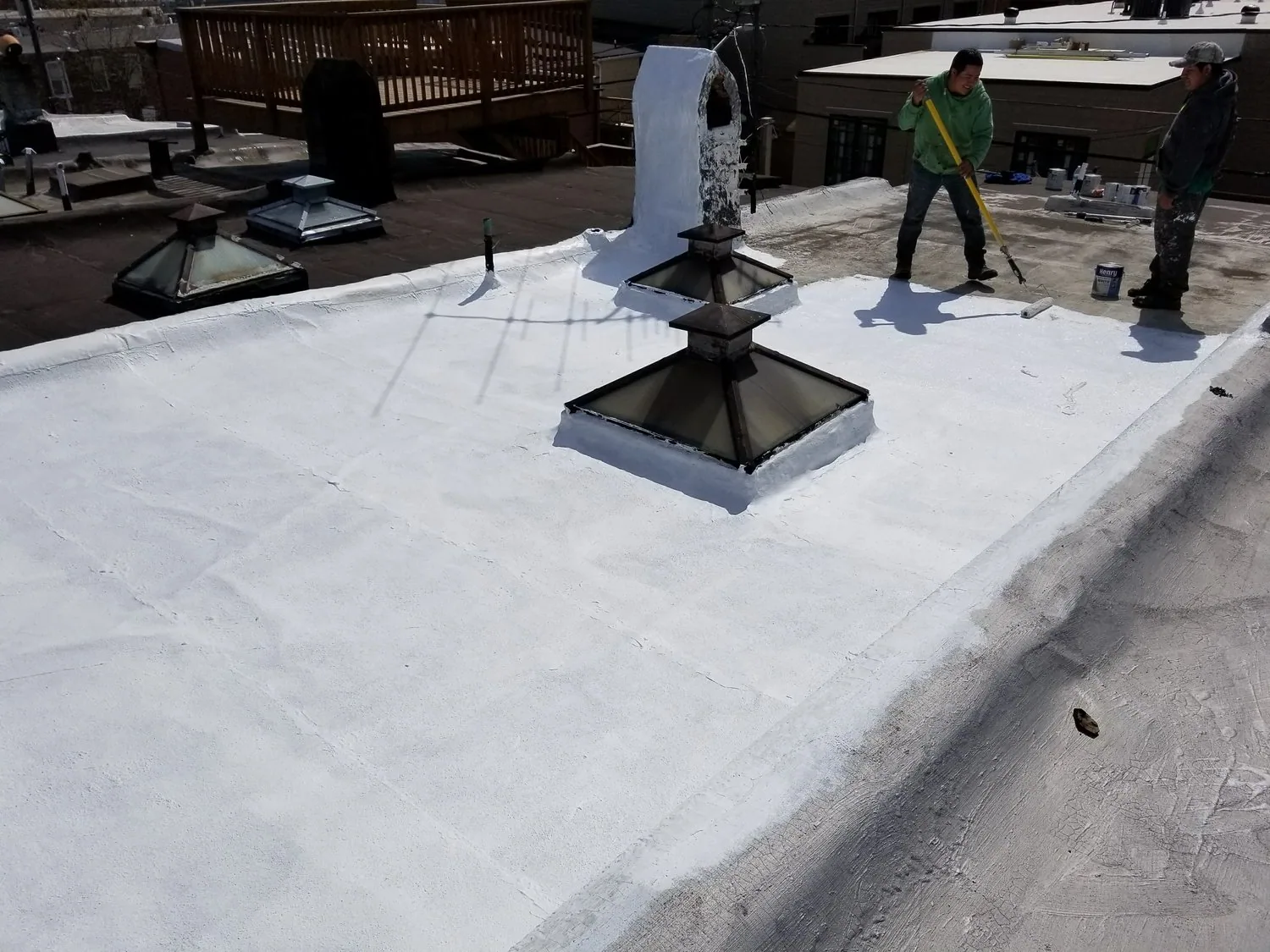
First determine the roof system. A single-ply membrane, built-up roof, modified bitumen, and metal roof do not share the same repair detail. Document the seam type, surface condition, attachment, edge, and flashing transitions. The repair must meet a sound substrate and remain compatible with the surrounding materials. A coating is appropriate only when the existing roof can accept it; it cannot dry wet insulation, restore a failed deck, or correct a drain that sits below the required flow path.

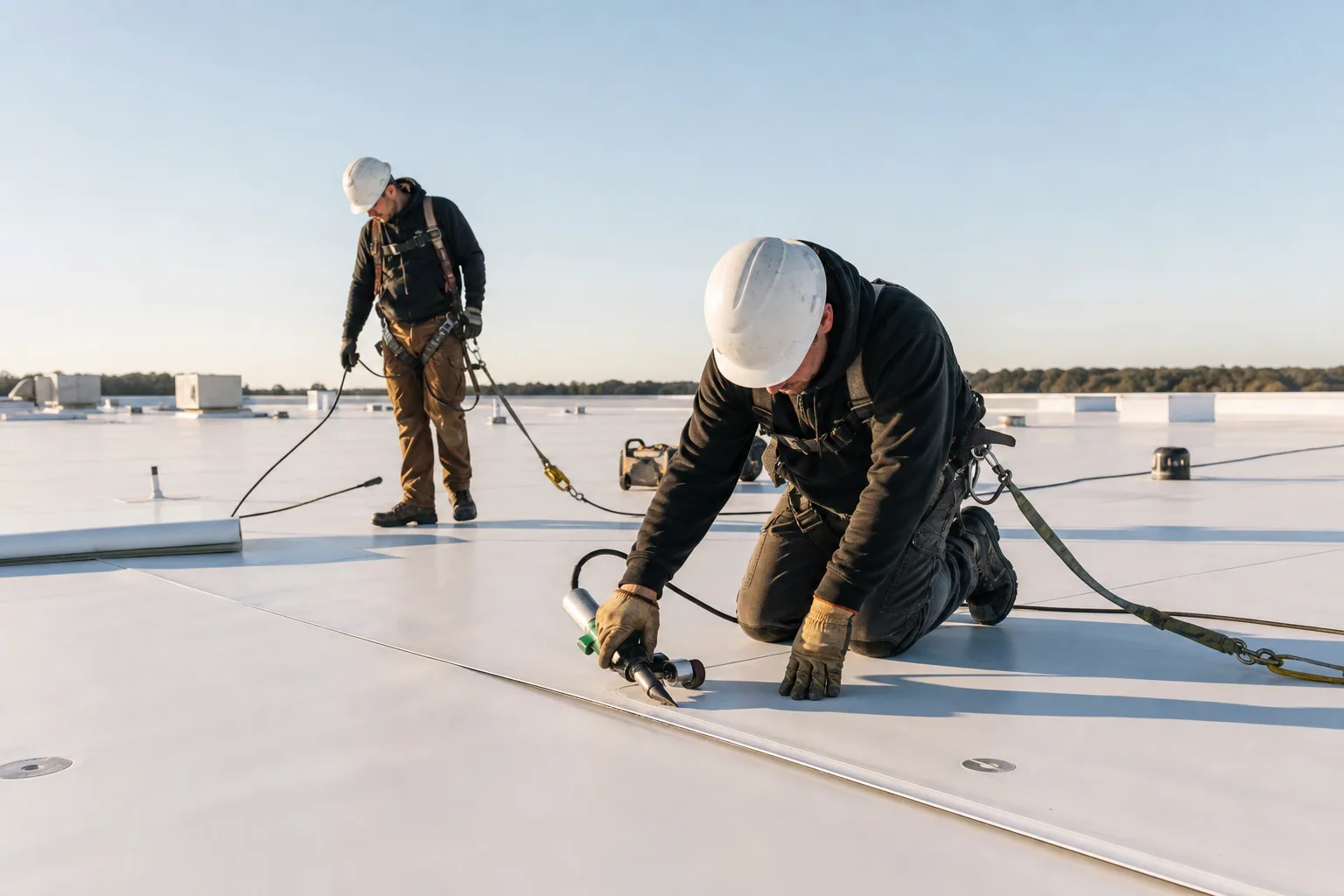
For a low-slope membrane, TPO repair and EPDM repair involve different seam and flashing practices. Confirm the material before specifying the patch. Where deterioration repeats or attachment has failed, compare localized repair with removal or a recover assembly, including insulation, cover board, edge metal, and penetrations. A proposal should state what stays in place and how concealed conditions will be handled.

Garland’s current code listing includes the 2015 International Building Code and 2015 International Energy Conservation Code. The specific permit and assembly requirements depend on the project scope. Confirm them for the building before procurement, and show the selected roof assembly and fastening details in the submittal or proposal.

Commercial Roofing in the SH 66 Triangle, Garland, TX

What makes repair and replacement scopes comparable?

Use the same roof map for every option. A repair proposal should show the location and boundary of each detail, the material to be installed, and the condition left outside the work. A replacement proposal should identify roof areas, tear-off assumptions, insulation and cover-board work, edge-metal transitions, drains, penetrations, and daily dry-in expectations. If opening the roof may uncover damage, explain how that finding changes authorization and cost before removal begins.

Timing depends on weather, material delivery, roof access, and coordination with other work. A small membrane correction can still be delayed by equipment relocation or a wet substrate. A larger project may need staged sections so operations continue while exposed areas are closed each day. The schedule should describe how the crew leaves the roof at each pause, not only the date it expects to finish.

A commercial roof replacement quote becomes useful when the owner can trace every line item to a roof zone and an observed condition. If a local Garland property also lies within the Garland Medical District, evaluate that separate building independently; shared city geography does not transfer roof conditions.

Commercial Roofing in the SH 66 Triangle, Garland, TX

What should the owner receive after the work?

Provide a closeout record with property, date, roof-zone identifier, before-and-after photographs, material installed, and the extent opened. State whether the repair reached sound material and whether water testing or another verification step was performed. List any area that was not included, a temporary measure that remains, and any follow-up that needs an owner decision or another trade.

Keep the record practical enough for the next visit. A maintenance inspection can compare the same seams, outlets, edges, and penetrations and note changes since the repair. Preserve the photos with the roof map so a future contractor does not mistake the repair boundary or repeat an investigation that has already been resolved.

Keep a second Garland site separate; compare it with the IH-30 corridor only after inspecting that roof independently. The record should tie the finding and repair to the building where they were observed.

Commercial Roofing in the SH 66 Triangle, Garland, TX

Common Questions

Does the State Highway 66 Triangle label identify my roof?

No. It is land-use context; inspect the building’s actual roof materials, drainage, and defects.

Can a repair begin before the roof system is known?

Temporary protection may be possible, but the permanent material and tie-in should follow identification of the existing assembly and receiving surface.

Does ponding always mean a drain is blocked?

No. Check the outlet, roof slope, insulation, and deck to determine why water remains.

What should a replacement estimate include?

Show roof areas, removal and dry-in assumptions, insulation, edges, drains, penetrations, and how concealed conditions will be approved.

How do I arrange work over an active business?

Identify the building contact, affected interior space, access requirements, equipment dependencies, and any schedule constraints before the crew arrives.

Commercial Roofing in the SH 66 Triangle, Garland, TX

Discuss a Garland roof concern

Share the property address, reported symptom, and roof area. We can inspect the assembly, identify a repair boundary, and coordinate temporary or permanent work with the building contact.

Call 555-555-5555 or request a roof assessment.

Questions About Your Roof?

ServicesRoof SystemsProperty TypesIndustriesService AreasDamage RepairCapabilitiesManufacturersAboutRequest a Roof Assessment555-555-5555
Call us today555-555-5555