Grocery Store Roofing in Garland, TX

Grocery Store Roofing in Garland, TX

Grocery Store Roofing

Property Types We Roof

A grocery roof repair needs to account for the assembly above both public and back-of-house spaces. A leak near a cooler, prep area or aisle can travel from a remote roof opening, and moisture near refrigeration equipment may involve more than one building system. We inspect the roof-side evidence, locate the affected material and explain which findings belong to roofing and which need another trade.

Garland includes food and beverage production alongside a broad range of commercial operations. Grocery roofs also need inspection around refrigeration, exhaust, loading and customer-service areas, with each store’s operations confirmed by its own contact. The Forest/Jupiter employment area includes manufacturing destinations near transit. For a grocery store, its building contact can confirm roof access, delivery windows and the reported location before inspection.

Where does the water enter the grocery roof?

The point where a ceiling tile stains may be far from the entry point. Water can travel on top of a vapor retarder, through insulation joints, along deck flutes or around a curb before becoming visible. We compare the reported room with drains, seams, rooftop units, pipe penetrations and roof transitions along a credible path. The goal is to find an opening that can be corrected, not merely cover the symptom indoors.

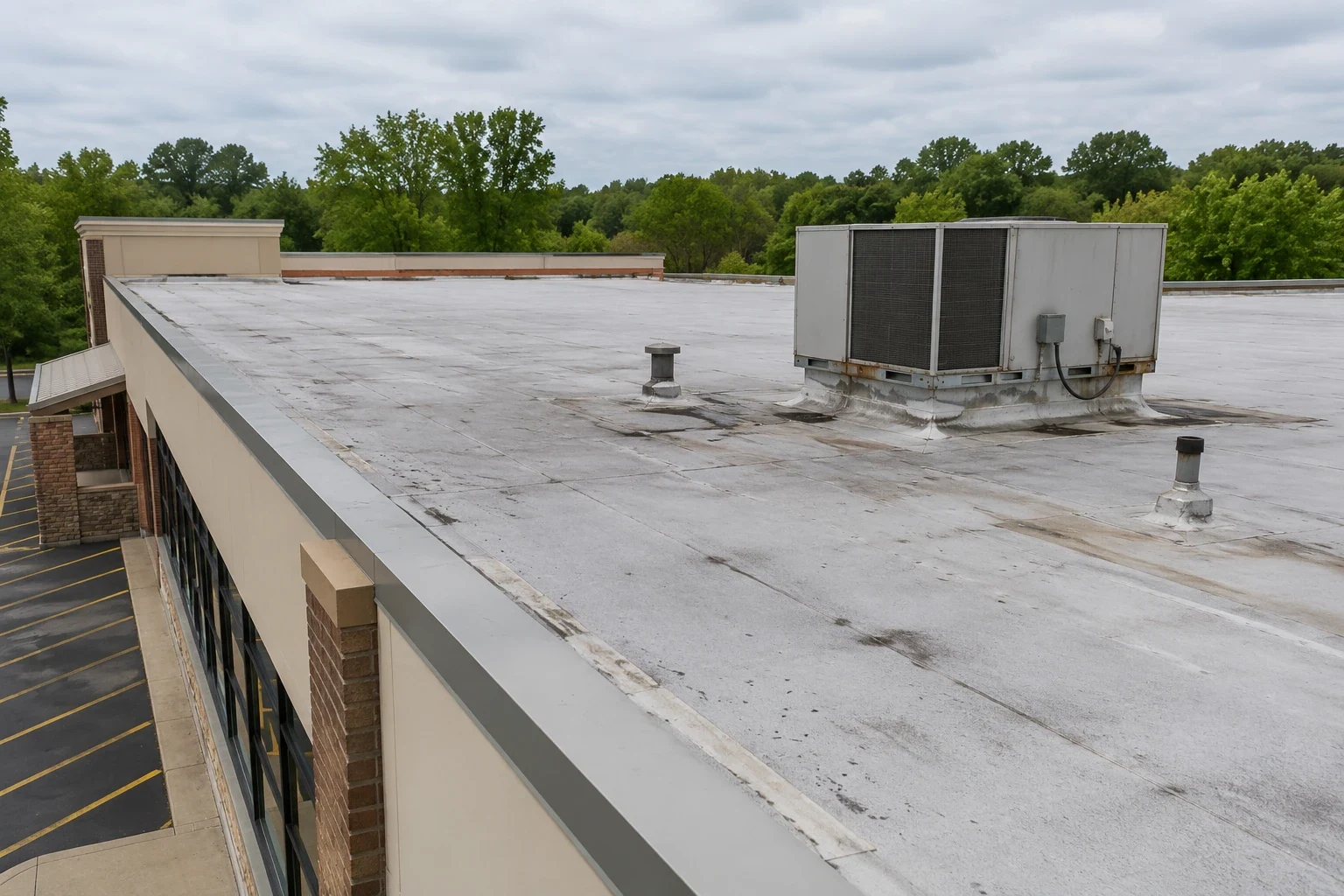
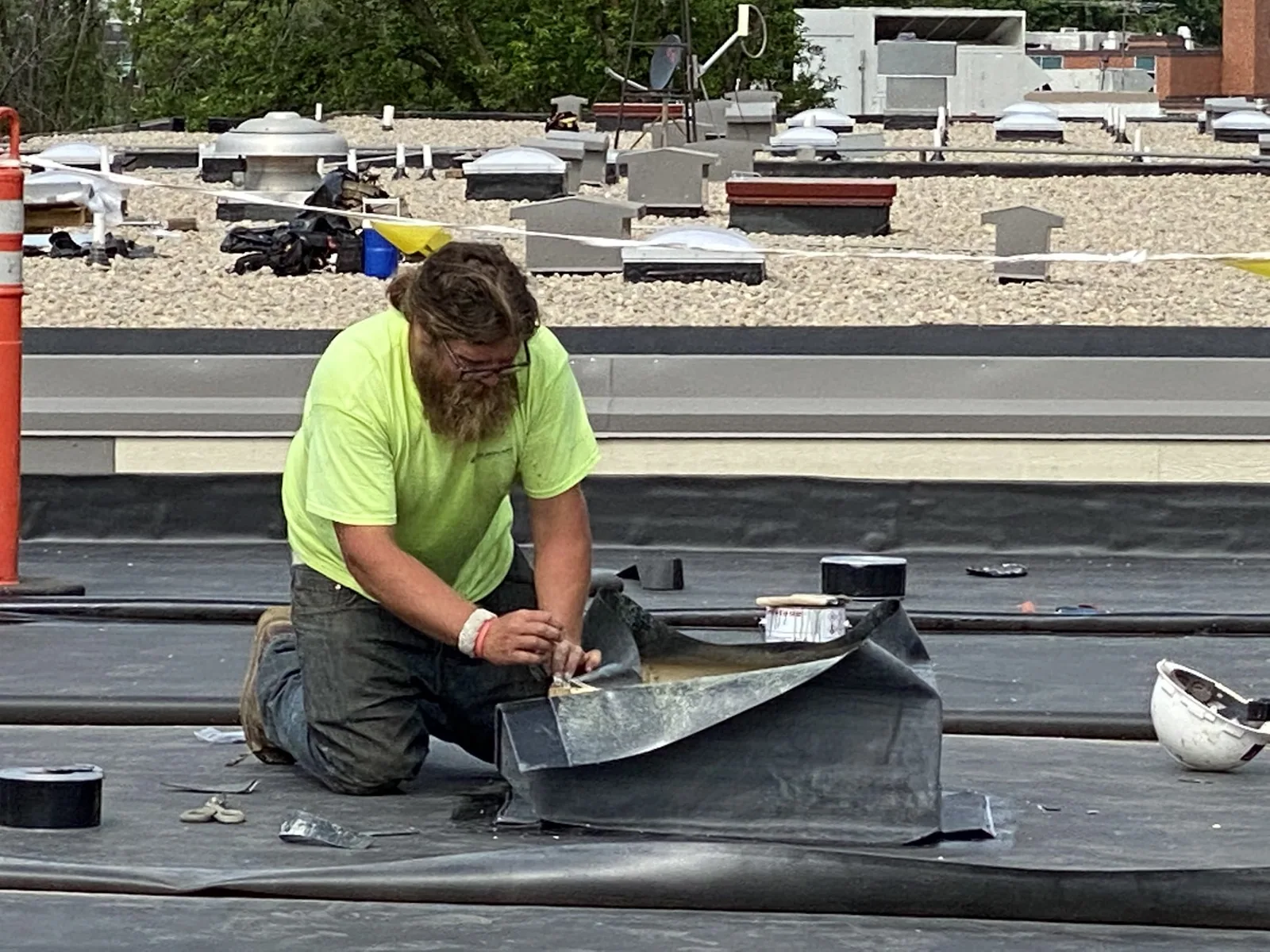
A store may contain many roof penetrations, but their condition and spacing must be confirmed on site. We inspect membrane laps and patches near refrigeration lines, exhausts and mechanical curbs; check terminations for loose or split flashing; and look for wet insulation that could widen the repair. If the roof surface itself appears sound, a condensate line or plumbing issue may require a different specialist.

The inspection notes should make the location repeatable. A roof plan, equipment tag, compass point or measured offset from a drain can identify the same area for the building contact and a return visit. The notes should separate confirmed defects from possible causes so the owner can authorize a defined repair without treating every nearby penetration as failed.
Grocery Store Roofing in Garland, TX

What must be considered near refrigerated spaces?

Refrigerated rooms and display cases create interior conditions that make water management consequential, but the roof crew should not assume the nature of the business’s food-safety procedures. The store representative identifies protected areas, product-handling rules and any required sanitation boundaries. Roofing scope should state where removal occurs, how debris is controlled and who clears the area for work.

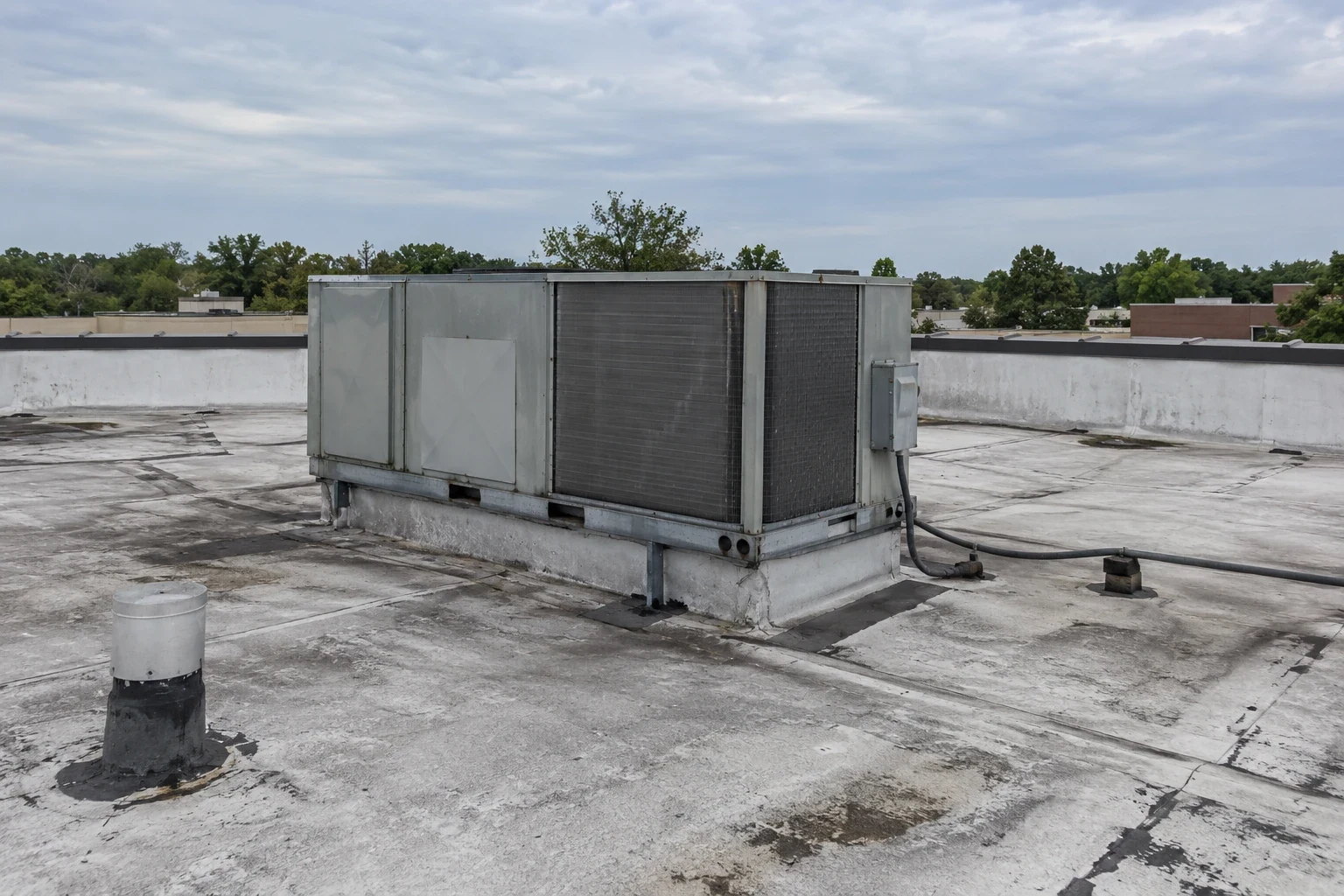
Roof equipment serving refrigeration may have curbs, lines and supports crossing the waterproofing. A roofing inspection examines visible flashing, membrane tie-ins and the substrate around those penetrations. Equipment operation and condensate questions may require a refrigeration or mechanical contractor. Identify those boundaries before a unit or connection is disturbed.

If an opening is necessary above an occupied or temperature-sensitive space, define the temporary cover and close-in standard before removal. A suitable plan accounts for forecast conditions, opening dimensions, available material and what the crew can finish that shift. If wet insulation extends farther than expected, the owner needs a decision point for added removal and a clear statement of what remains protected in the interim.

Grocery Store Roofing in Garland, TX

How do drains, coolers and roof slope interact?

A roof outlet can be surrounded by debris, loose membrane or a failed flashing connection. We check the bowl, flange, clamping ring, nearby seams and visible slope, and note whether downspout or drain-line questions fall outside the roofing scope. Standing water after a storm is an observation, not enough by itself to diagnose a failed roof or inadequate structure.

Equipment zones can interrupt drainage paths. Curbs, support rails and prior patches may redirect runoff or create low points, while a blocked internal drain may hold water without a membrane defect at the outlet. A useful report maps the water route and separates roofing correction from plumbing or structural investigation. The owner can then decide whether one trade or several need to return.

If the reported issue involves the outlet or retained water, compare the findings with roof drain and scupper work and commercial ponding-water repair. These service topics do not imply a defect at your store. Inspection determines whether a repair should include the drain flashing, a membrane field, surrounding insulation or a non-roof drainage component.

How is an occupied store prepared for roof removal?

Before opening the roof, identify the area below, the path for tools and material, roof access, and the building representative authorized to approve changes. The store contact should decide whether merchandise, fixtures or equipment need relocation or protection. The roofing team should not infer inventory handling, department schedules or access rules; those details come from the property’s own staff.

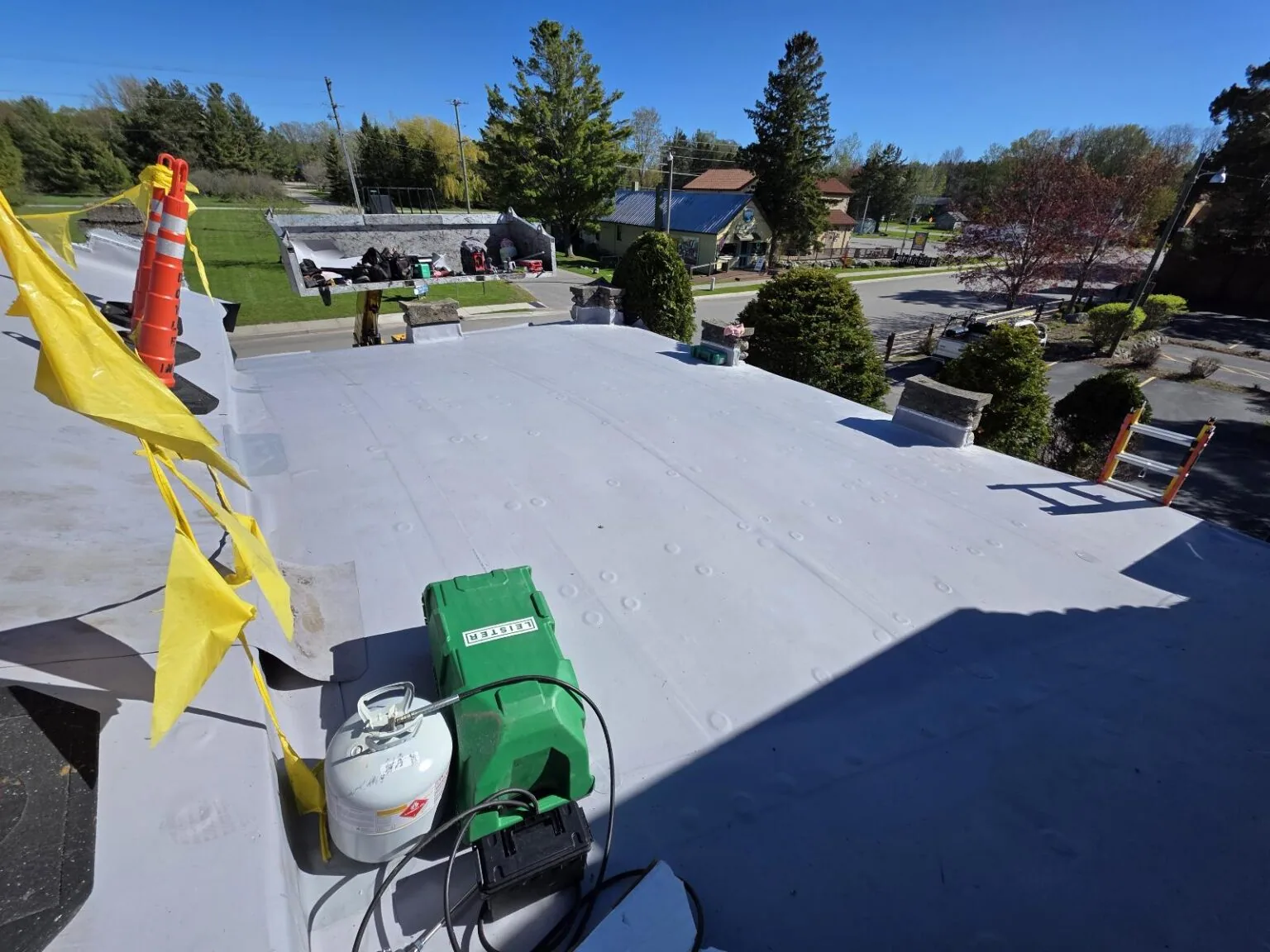
The work scope can specify a limited removal area and what the crew will do if materials beneath the membrane are wet or deteriorated. Photographs, measurements and a prompt owner decision help avoid unplanned expansion. If other trades must disconnect equipment or inspect interior conditions, identify who schedules them and which parts of the roof opening cannot be permanently closed until their work is done.

At the end of each work period, the building contact should understand whether the roof is permanently complete or temporarily protected. The record should name the remaining task, responsible party and expected return condition. Clear close-in communication matters because a store’s interior may remain in use even when the roof repair is waiting on material, equipment work or an owner approval.

Grocery Store Roofing in Garland, TX

Is this a repair, an equipment detail or a larger reroof?

A single failed pipe boot may support a small repair. Split laps, wet insulation across several bays or repeated curb failures may suggest a broader assembly concern. We separate observed defects from conditions requiring testing and do not recommend replacement from one leak report alone. The owner should understand where the repair stops and why.

Garland’s listed 2015 building and energy-conservation codes took effect on September 19, 2016; the project professional and local authority can confirm which provisions apply to a grocery-roof scope. Current permit requirements turn on the project, so confirm them with Garland and the design team before replacement. Review commercial roof replacement and roof condition reports if repair findings need to support a capital decision.

A reroof specification should address deck condition, insulation, drainage, penetrations, edges and how mechanical or refrigeration equipment interfaces with the assembly. TPO roofing is an example of a system category to evaluate, not a universal grocery solution. DFW summers run hot, while spring and fall bring wetter periods and thunderstorms. Grocery maintenance can prioritize drainage and perimeter checks before those rainier seasons. Use that seasonal pattern to schedule drainage checks and perimeter reviews before the wetter months, then base repair details on the assembly at the store.

Other food-related buildings can present different roof questions. Compare restaurant roof repair considerations with cold-storage roof assemblies only where the actual equipment and use justify the comparison; each building needs its own assembly review and repair boundary.

Grocery Store Roofing in Garland, TX

Common Questions

Can a roof leak near a cooler be assumed to come from the refrigeration equipment?

The source could be a roof penetration, seam, drain or separate building system. We inspect the waterproofing and identify when a refrigeration specialist should examine equipment or condensate.

Will the inspection require moving store product?

That is determined by the property representative based on the area below the roof work. The roofing scope should identify the proposed opening and allow the owner to set any protection or relocation requirements.

What roof details need attention around grocery refrigeration equipment?

Refrigeration lines, exhaust curbs and service penetrations each need a compatible roof-side connection. We document those transitions separately so a repair around one unit does not assume the condition of another. We verify the assembly and condition at the requested store before recommending repair or replacement.

When does a leak repair become a reroof evaluation?

A broader evaluation is useful when findings extend beyond one defect, such as repeated seam failures or moisture across several areas. The inspection should document those observations before comparing options.

Grocery Store Roofing in Garland, TX

Identify the affected roof area before store work is scheduled

Share the grocery property address, interior location of the concern and building contact who can arrange roof access. We can inspect the relevant roof connections and explain the repair boundary, temporary protection and any separate trade questions.

Call 555-555-5555 or request a roof assessment.

Questions About Your Roof?

ServicesRoof SystemsProperty TypesIndustriesService AreasDamage RepairCapabilitiesManufacturersAboutRequest a Roof Assessment555-555-5555
Call us today555-555-5555