
What moved, and where does the connection begin?
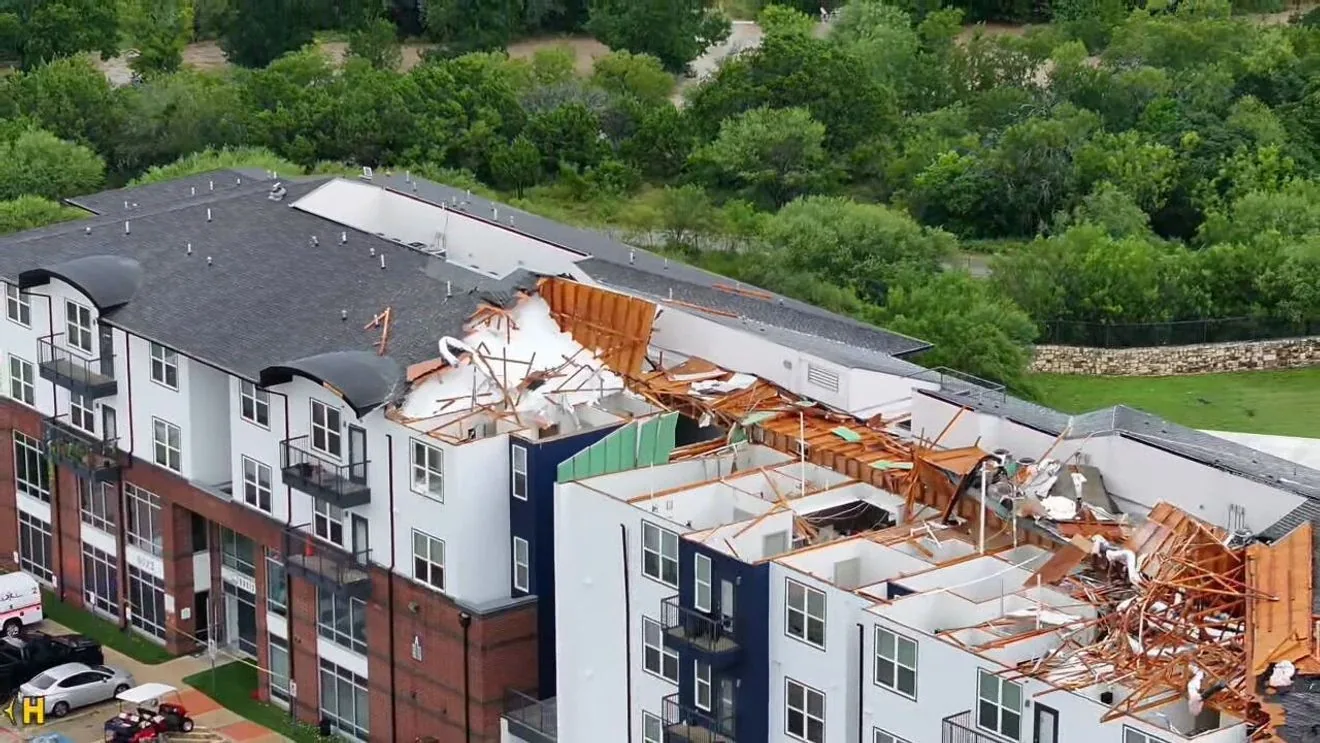
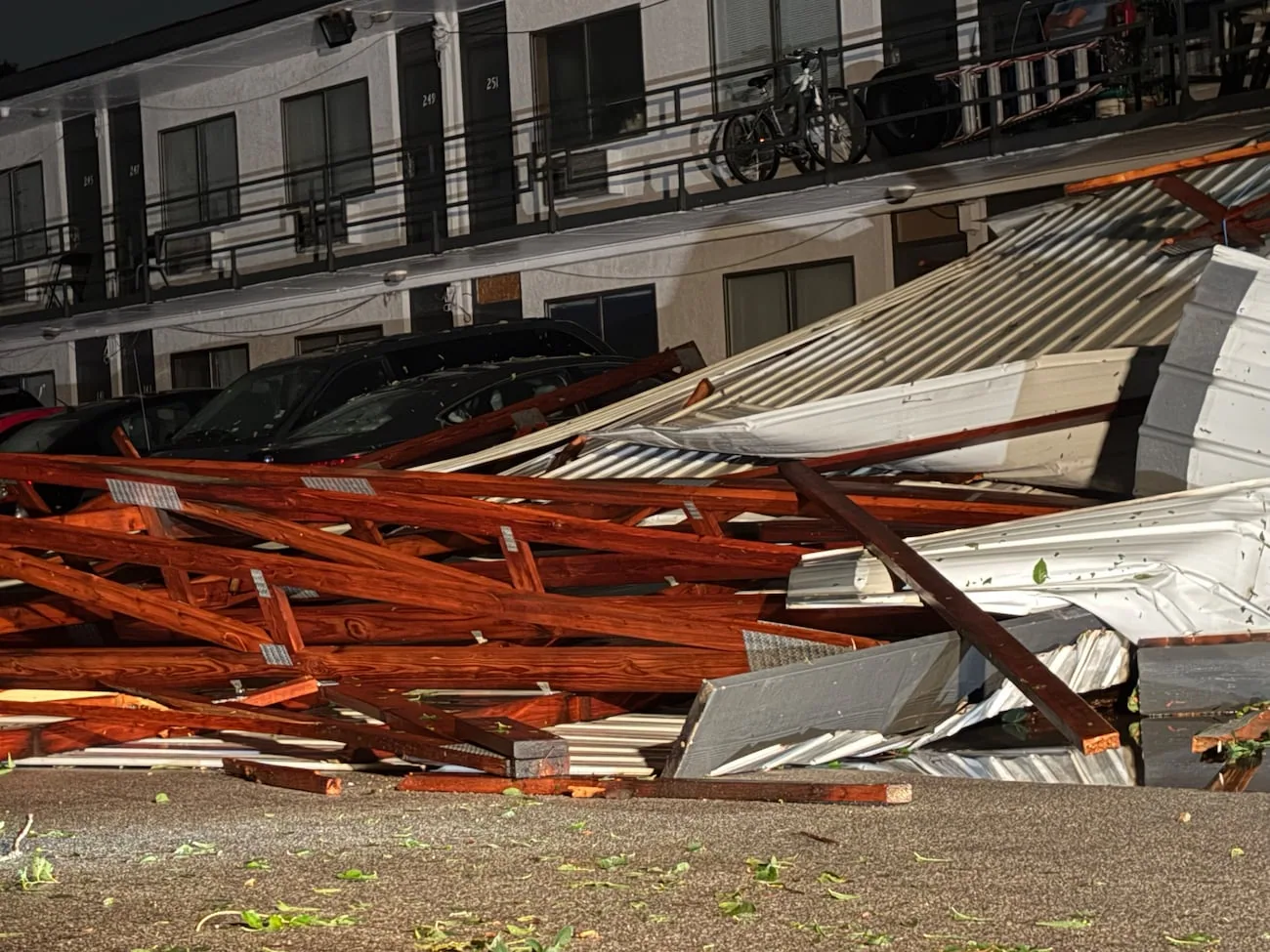
Wind-related symptoms may appear at a perimeter, corner, roof-to-wall transition, curb or field sheet. We compare the reported area with the visible attachment and adjoining surface before naming a repair. A loose metal edge can involve its securement and nailer; a lifted flashing termination can leave the membrane below it intact or damaged; a displaced field sheet may expose attachment questions beyond the opening itself. We record what is visible and identify anything concealed that would require authorized removal to inspect. We compare the visible attachment with the event record available through our wind damage response and assessment.
A stain inside the building can help establish timing, but it does not prove the roof entry sits directly above that room. Water can travel along a deck, insulation joint or structural member. We follow accessible details and note plausible paths instead of treating an interior mark as a diagnosis. If the symptom is active, provide the interior location and conditions observed so the examination can compare them with the roof construction. When an opening remains exposed, our temporary emergency roof protection scope should name its boundary and follow-up.
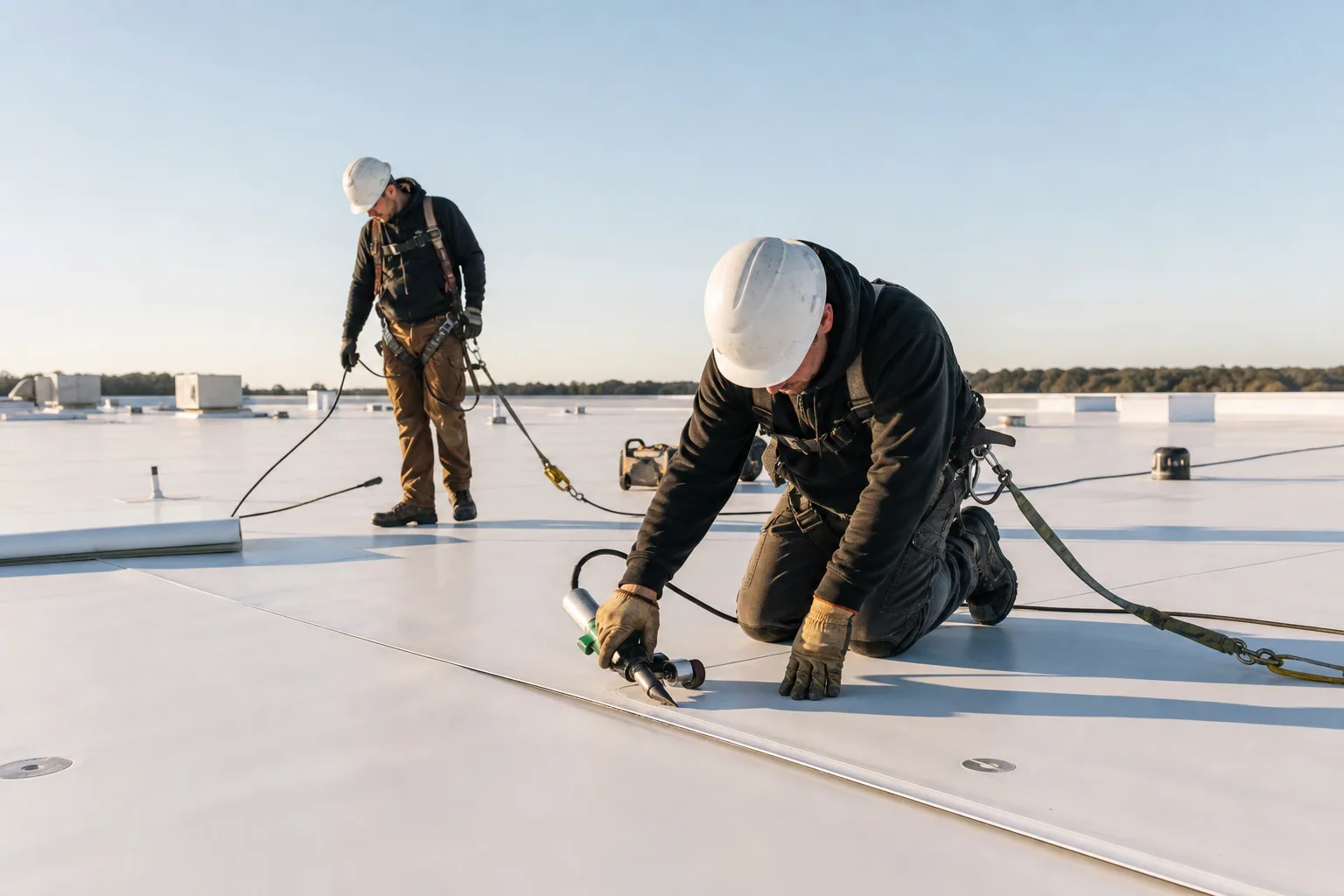
For a mechanically attached membrane, inspect the perimeter attachment and corner zones alongside the lifted sheet. On metal, check fasteners, sidelaps, end laps, clips, and eave or rake details; movement at one panel can affect the next connection. End the repair boundary where the surrounding material remains secure, and record any area that needs a separate attachment review.