Describe the material change before naming its cause
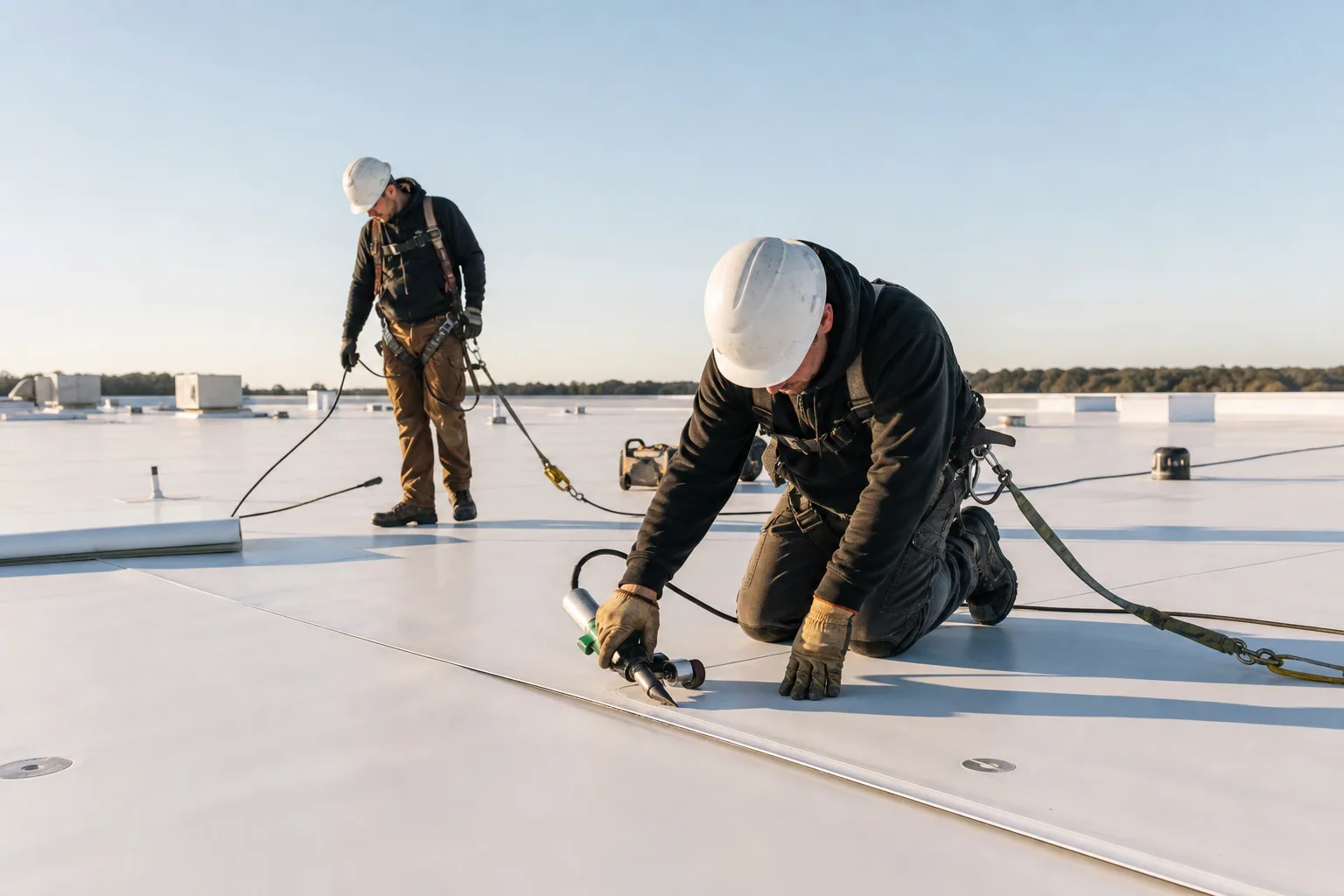
We look for conditions that can be tied to the reported concern: open or brittle seams, surface erosion, failed flashing, exposed reinforcement, cracking, loose attachment, worn coating or recurring water entry. We note whether findings are confined to one detail or appear across several roof areas. We also check maintenance history and available assembly records when the owner has them. Those records can help distinguish a material nearing the end of its serviceable condition from damage at a discrete connection, but they do not replace field examination.
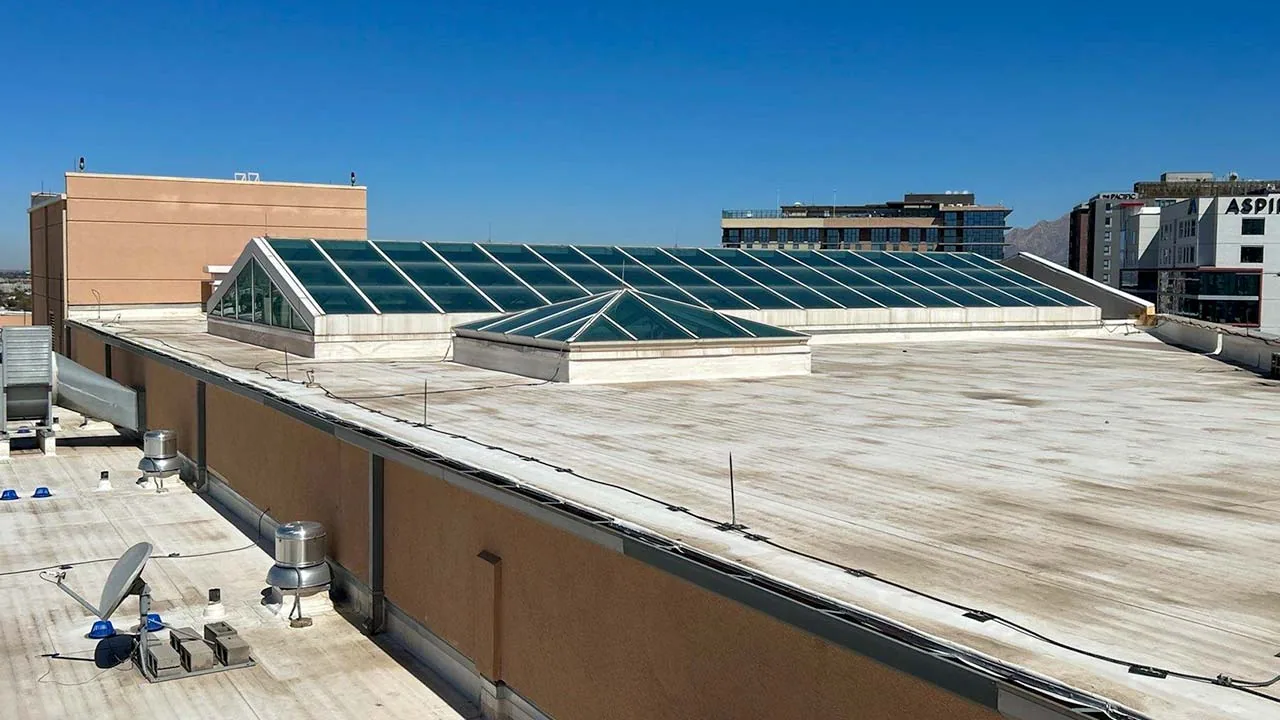
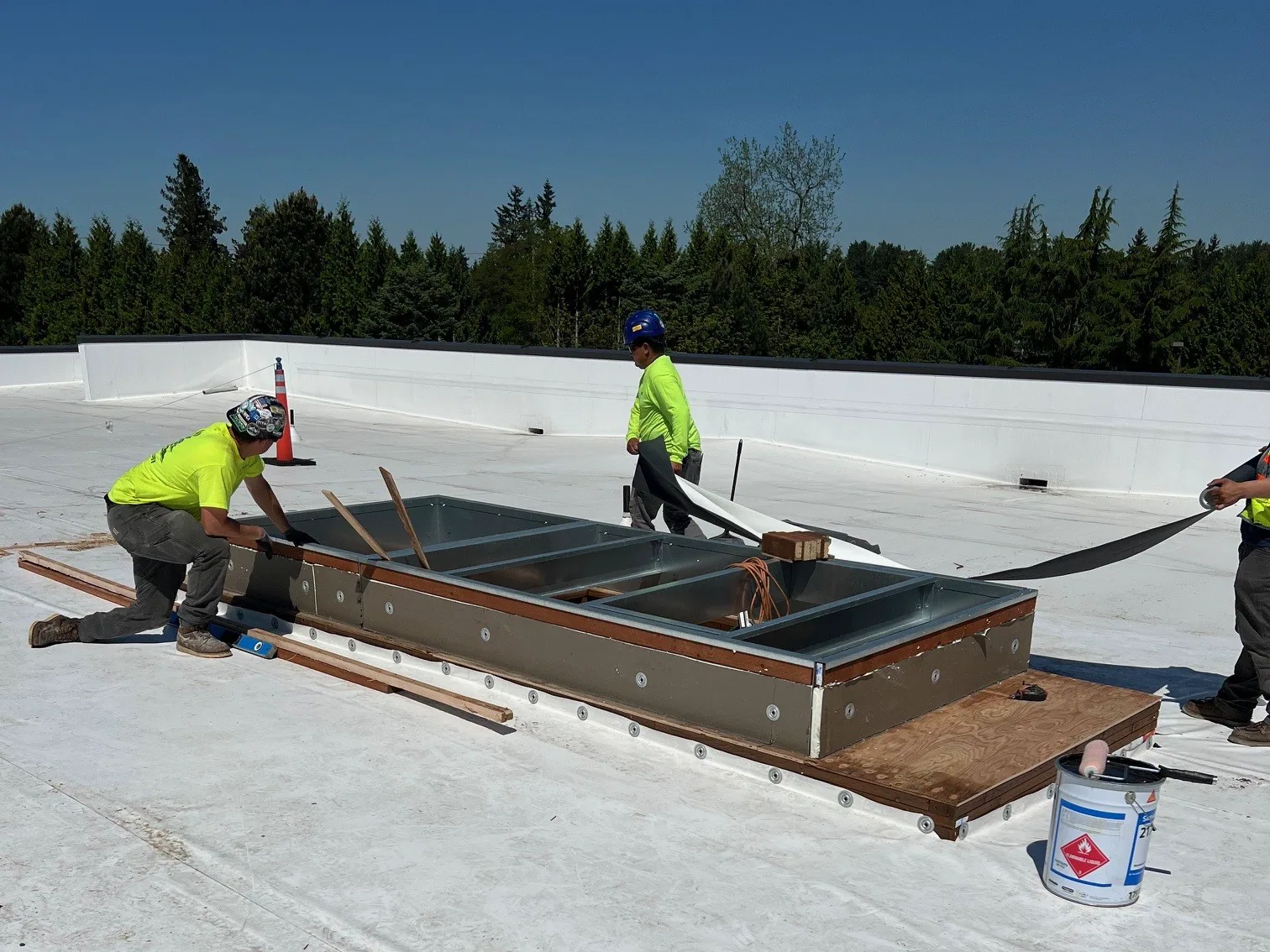
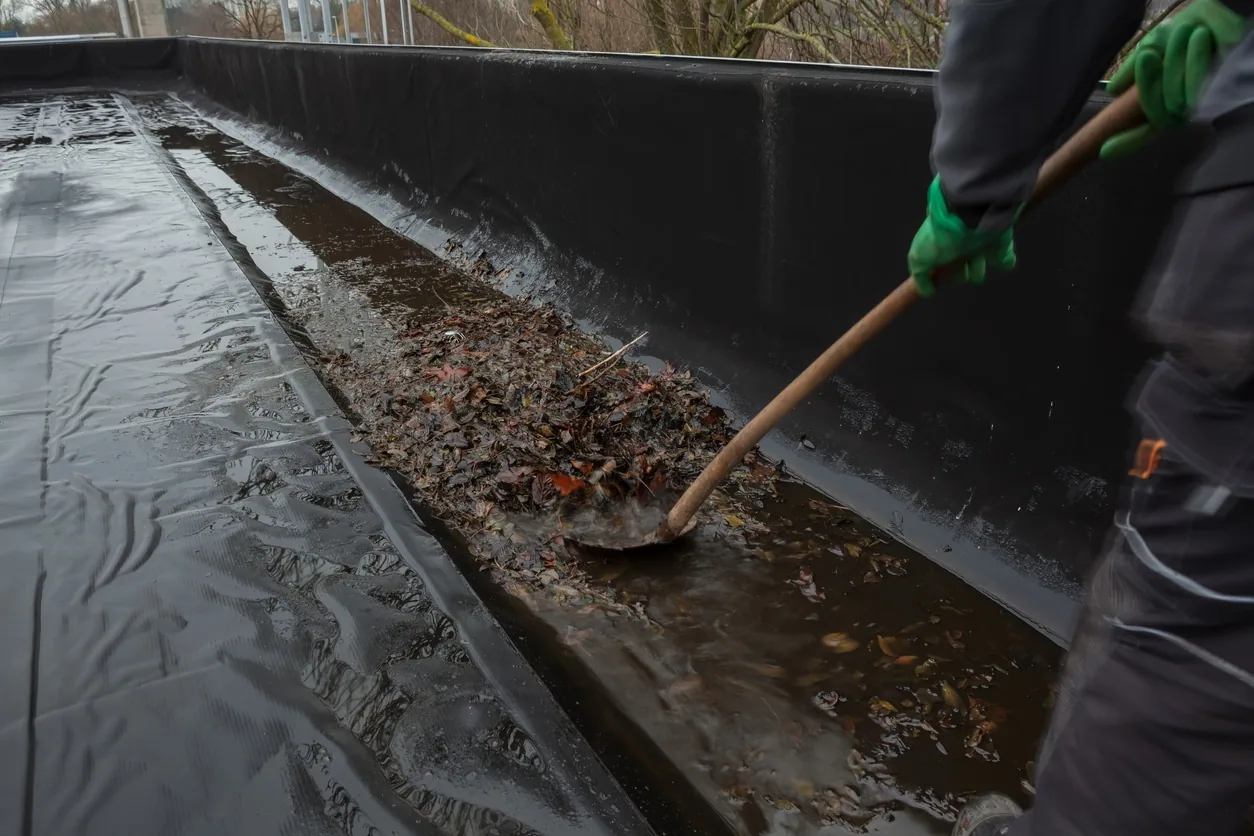
When water appears indoors, trace the path to the roof and inspect seams, flashings and drainage before attributing the condition to heat or UV exposure. We compare the reported interior location with drains, laps, curbs, wall transitions and other likely entry points, then describe what we could access. A commercial roof inspection can document those observations and exclusions. If we find a specific open point that can be reached safely, commercial roof leak repair may be scoped to the inspected detail while broader surface changes are evaluated separately.
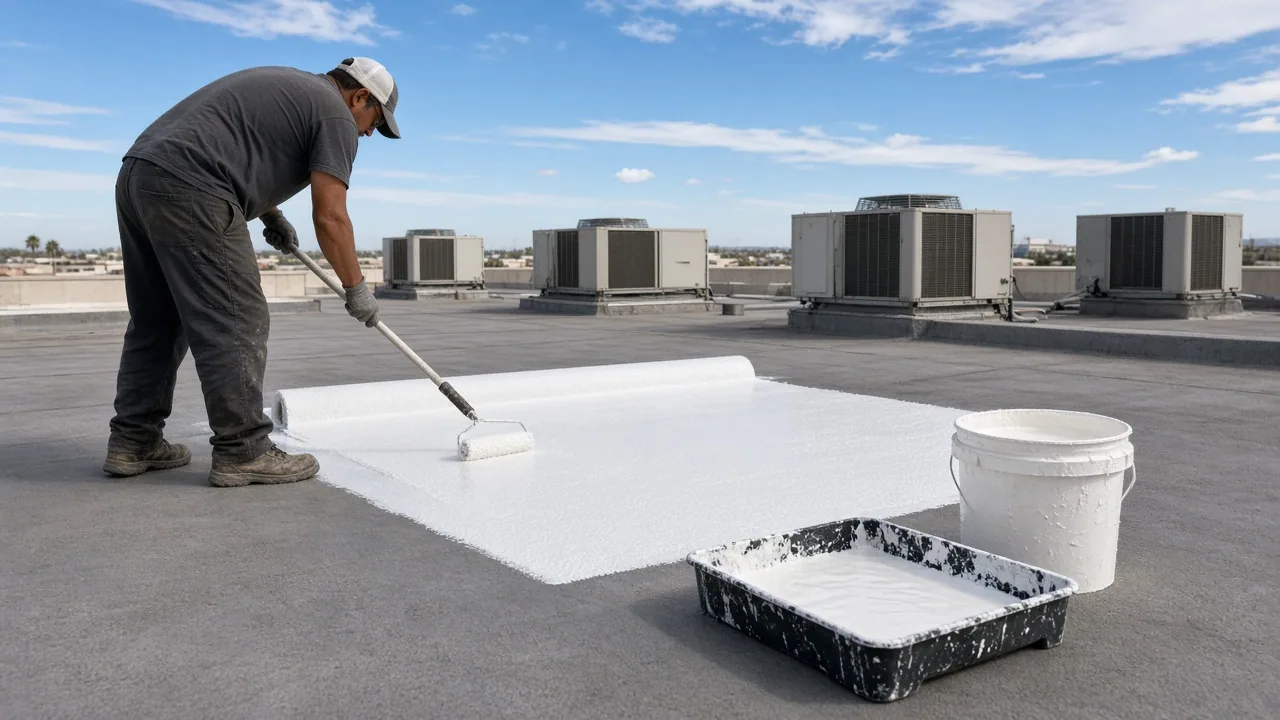
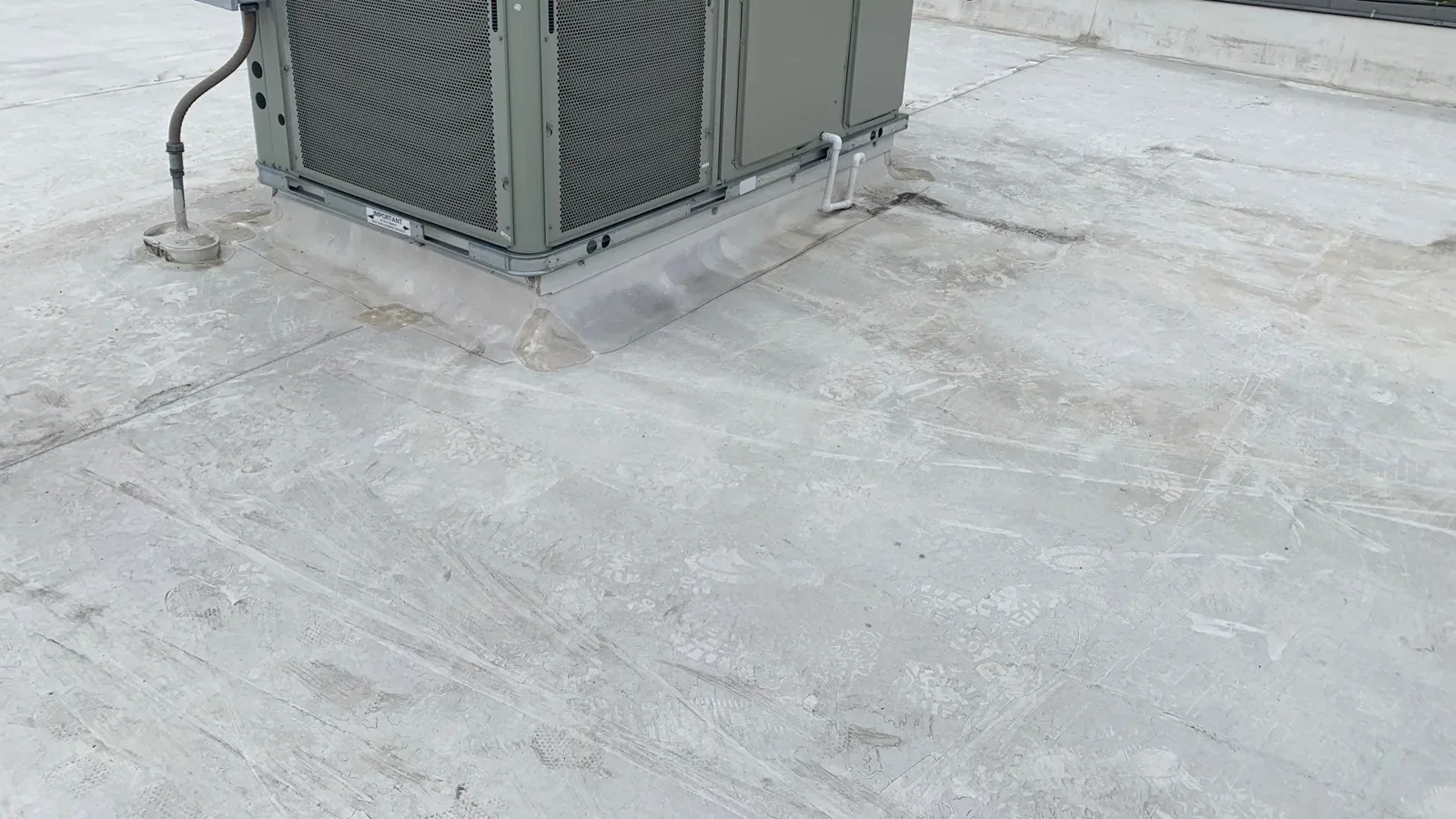
Surface chalking or faded color alone does not show how much serviceable material remains. We compare exposed and protected areas, check whether the surface flexes or fractures at a detail, and look for shrinkage, open laps, blistering, or sealant separation. The observed change, roof age if documented, and conditions beneath the covering guide the next step; appearance by itself does not set the repair boundary.